Group Transportation Dubai
Plan private group journeys in Dubai with a suitable van, minibus, bus or coach. Compare transport for families, tourists and larger parties, including airport transfers, hotel pickups and group sightseeing.
What Is Group Transportation in Dubai?
Find the Right Group Transport
Explore vehicle types, luggage advice, journey options, quotation factors and answers to common group-booking questions.
Group Transportation Dubai: A Practical Overview
When several people need to reach the same destination, the choice is not simply between a car and a bus. The right arrangement depends on whether everyone starts together, whether travellers are carrying luggage, how many stops are planned and how much time the group wants to spend at each location. A shared vehicle can simplify meeting arrangements, but only when its passenger seating and storage are appropriate for the actual party.
Royal Blue Van Rental Dubai handles enquiries for private group journeys in Dubai, from small family outings to larger organised trips. The aim of this guide is to help you describe the journey clearly and select a suitable category before requesting a quotation. You can compare the Royal Blue fleet or review the broader passenger transportation services when your journey has specialised requirements.
For people comparing individual passenger vans, the main van rental Dubai page provides a different starting point. This group transportation guide instead concentrates on the decisions shared by groups of different sizes: travelling together, managing baggage, setting a pickup plan and choosing between one vehicle and several.
Group Transport by Size
Small private parties
Families, friends and smaller visitor groups may prefer a passenger van or MPV so they can follow a shared itinerary. Confirm the usable passenger seats, child seating requirements and luggage before choosing a model.
Medium-sized visitor groups
A minibus can be considered when a single smaller vehicle is insufficient. Think about how quickly the group needs to board, whether everyone is travelling with suitcases and how often the journey stops.
Large organised groups
A bus or coach may suit a larger party travelling together, particularly where a single pickup and destination are planned. Verify seating and baggage arrangements for the exact vehicle offered.
Groups travelling in sections
Several vehicles may work better when guests have different arrival times, pickup addresses or destinations. A coordinated booking needs a clear passenger allocation and contact plan.
Families with children
A headcount should distinguish adults, children and infants. Tell the team about child seats, pushchairs and any assistance needs so the proposed vehicle can be checked.
Groups with heavy baggage
Airport parties and longer-stay visitors should provide bag counts and dimensions. Suitcases can change the suitable vehicle category even when all passengers would otherwise fit.
Passenger Count, Luggage and the Best-Fit Vehicle
How many people are travelling? Count every traveller who needs a seat. Include children and explain any child-restraint requirements rather than treating them as spare capacity. For a mixed-age family, the most useful booking information is the actual party composition, not an approximate phrase such as “about ten people.”
How much baggage is coming? A group carrying small day bags is different from a group arriving with checked suitcases, cabin bags, pushchairs and sports equipment. Tell the booking team how many pieces there are and flag anything bulky. Vehicle luggage space varies by layout and by the number of passenger seats being used.
Will everyone travel together? If some guests are arriving later, staying at different hotels or leaving earlier, a larger vehicle is not automatically more convenient. Consider whether one shared departure or several coordinated transfers would better match the group schedule.
What makes a good fit? A suitable vehicle should accommodate passengers and baggage safely while supporting the route, pickup location and expected duration. Ask for confirmation of the assigned vehicle configuration rather than relying on the model name or an image alone.
Six Details That Determine Group Transport Suitability
Accurate passenger list
Provide the total headcount and note adults, children and travellers needing assistance.
Luggage inventory
Count checked suitcases, cabin bags, strollers, mobility equipment and other bulky items.
Pickup locations
State whether everyone meets at one address or requires separate collection points.
Journey type
Identify an airport transfer, hotel shuttle, direct trip, sightseeing tour or multi-stop itinerary.
Timing and waiting
Share flight times, appointment times, expected stops and whether the vehicle must remain available.
Return and changes
Explain whether the trip ends at the starting point, a different destination or after staggered drop-offs.
Vans for Small Groups
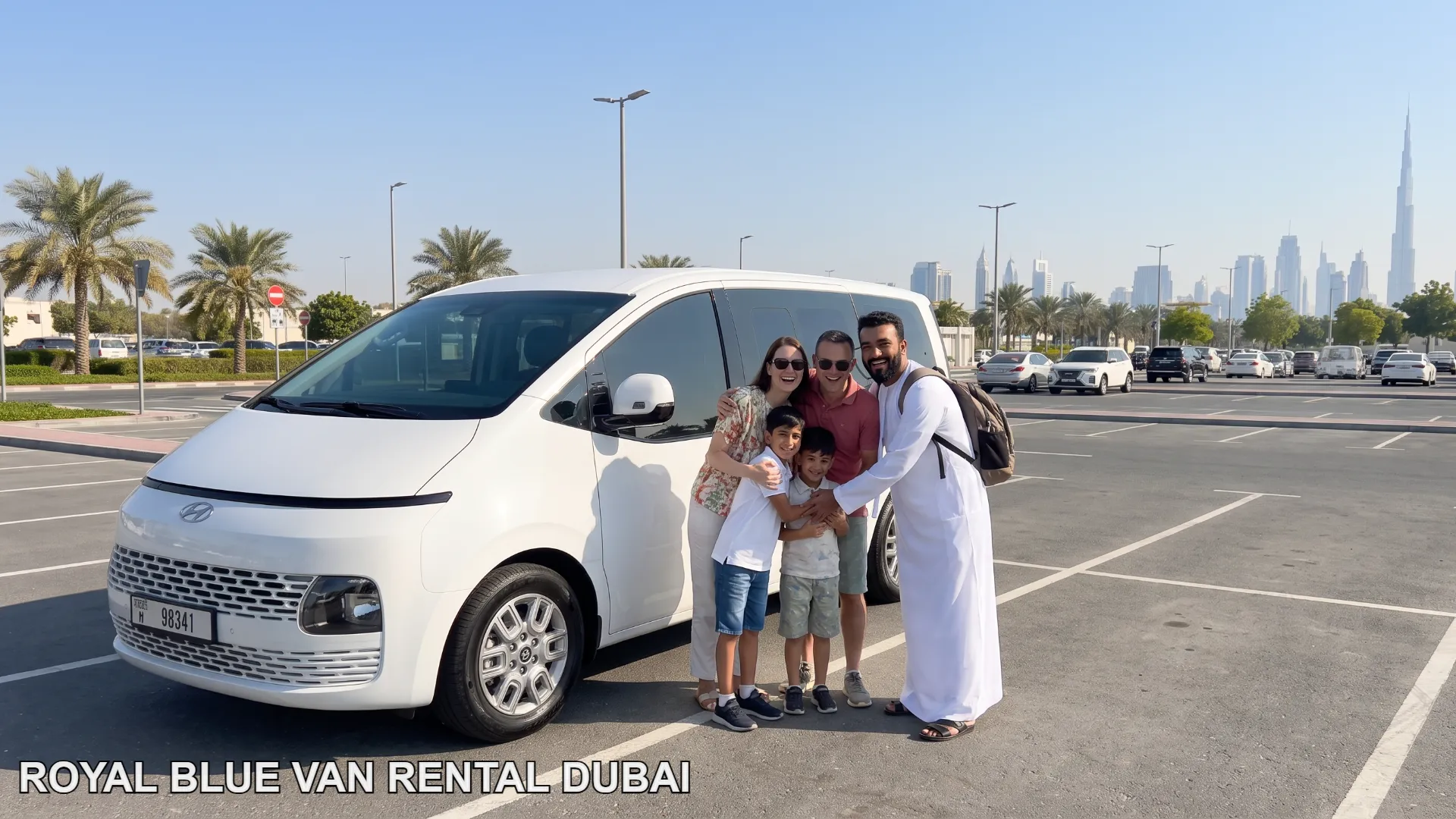
When a smaller shared vehicle makes sense
A smaller group may value staying together between a hotel, restaurant, attraction or family residence. A passenger van is often worth considering when the alternative would be organising several separate car pickups and making sure everyone reaches each stop at the same time.
For short city journeys, the practical questions are the pickup point, number of passengers and whether there will be luggage. For a full day with several stops, also specify how long you expect to stay at each place and whether the group wants the vehicle to remain available.
Compare the confirmed seating and baggage arrangement before selecting any specific model. An eight-passenger vehicle name should not be treated as a guarantee that eight people plus full airport luggage can be accommodated together.
Which Small-Group Vehicle Type Should You Consider?
7-seater car with chauffeur
Consider this category for a smaller private party seeking a shared city journey. Ask about usable passenger seats, children, luggage and the actual vehicle offered before committing.
8-passenger van
A passenger van may suit a group whose members want to travel together to attractions, hotels or private addresses. Confirm whether the full group and its bags fit comfortably.
Hyundai H1 passenger van
The Hyundai H1 is a model to compare for private group movement. Seating layouts can vary, so provide the passenger and baggage details rather than assuming one fixed capacity.
Mercedes Vito
A Mercedes Vito may appeal to customers comparing passenger vans for a private itinerary. The assigned configuration, route and quote should determine suitability.
Kia Carnival family MPV
The Kia Carnival is a people-focused MPV to consider for families and smaller travelling parties. Child seating and luggage planning remain important for airport and hotel journeys.
Honda Odyssey passenger MPV
An MPV such as the Honda Odyssey may be considered when a family wants one shared vehicle. Confirm actual seating, luggage and requested service details.
Chevrolet Suburban or Lexus sedan
These are alternatives for smaller parties with different comfort or baggage preferences, not substitutes for a large group vehicle. Compare them only when passenger count permits.
Families Travelling Together in Dubai
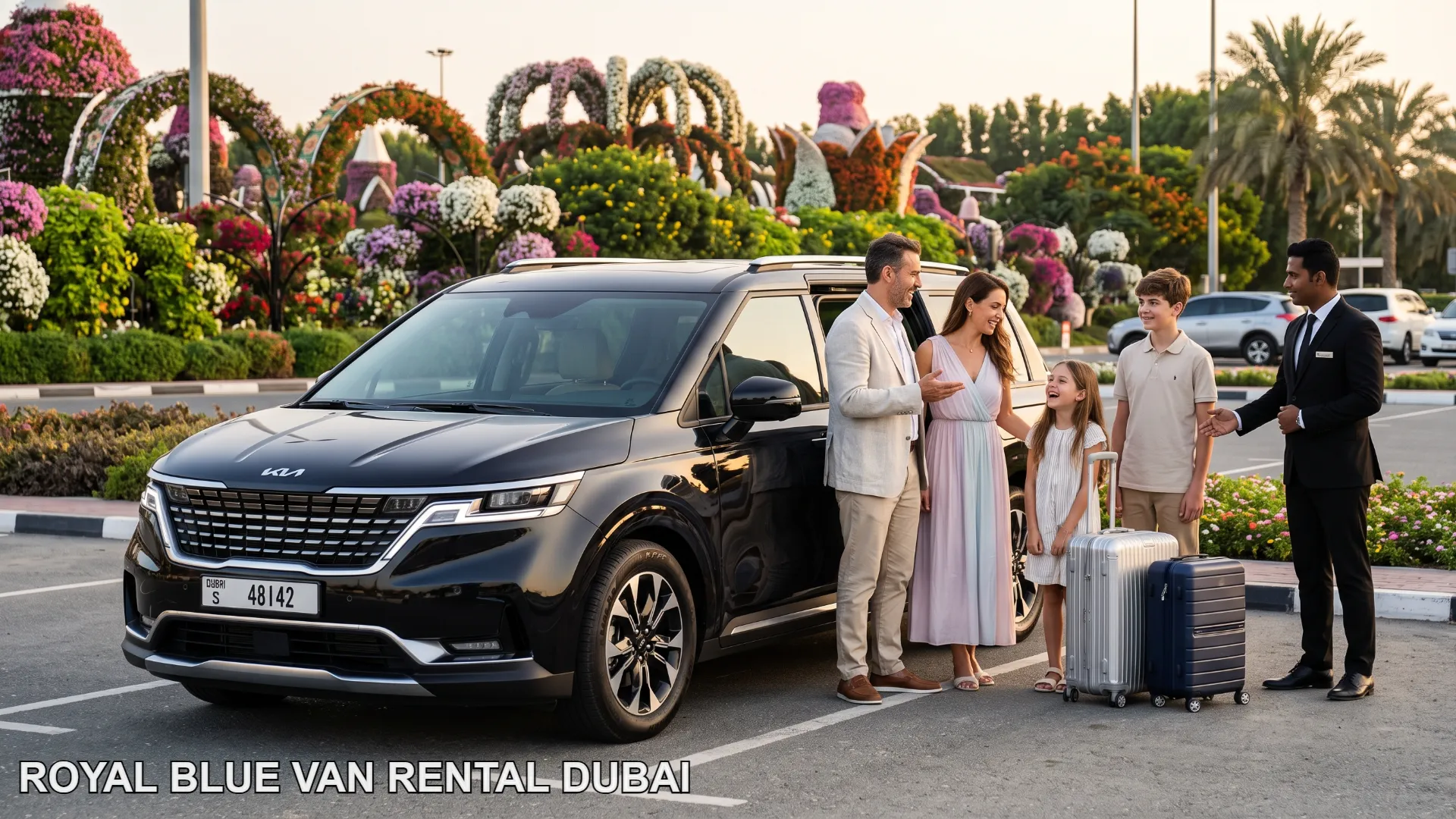
Family travel needs more than a seat count
Families often have a combination of adults, young children, hand luggage, suitcases and items such as a stroller. These requirements should be explained together. A vehicle that appears spacious in a photo may offer less luggage room when all available passenger seats are in use.
For a family airport arrival, the pickup details should identify the flight and terminal. For a hotel departure, the address, desired pickup time and destination are the starting points. If several relatives are staying at different properties, list those stops in the intended order.
If the family is planning an outing with restaurants or attractions, share the proposed route and approximate duration. That information makes it easier to decide between a direct transfer and a vehicle booking that covers multiple stops.
Hyundai H1 Group Transportation

Who should compare a Hyundai H1?
A Hyundai H1 may be worth considering for a private party whose size and luggage are suitable for the particular seating layout. It is relevant to enquiries about hotel transfers, city visits, family journeys and shared transport between planned stops.
When asking for a Hyundai H1, provide the number of adults and children, the bag count and whether any passengers need extra assistance. Do not assume that all H1 vehicles have identical interior arrangements or that every configuration is appropriate for airport luggage.
If your group is larger than the assigned H1 can accommodate, the next step is to compare a suitable minibus or a coordinated vehicle arrangement rather than trying to fit passengers or baggage beyond the vehicle’s confirmed capacity.
13-Seater Minibus Hire for Group Journeys

Why compare a 13-seater minibus?
People searching for transport for a group near this size often want to keep everyone in one vehicle without booking a full-size coach. A minibus can be an appropriate category to enquire about, but the name alone does not confirm the number of usable passenger seats on the vehicle supplied.
Explain whether the party includes children, how many suitcases are travelling and whether the group will make several stops. A sightseeing party carrying small day bags has a different space requirement from an airport group with full checked luggage.
Ask the booking team to compare the proposed minibus with a passenger van or a larger minibus if your headcount is close to the vehicle limit. A little planning at quotation stage can prevent a poor fit on the travel day.
Minibuses for Medium Groups
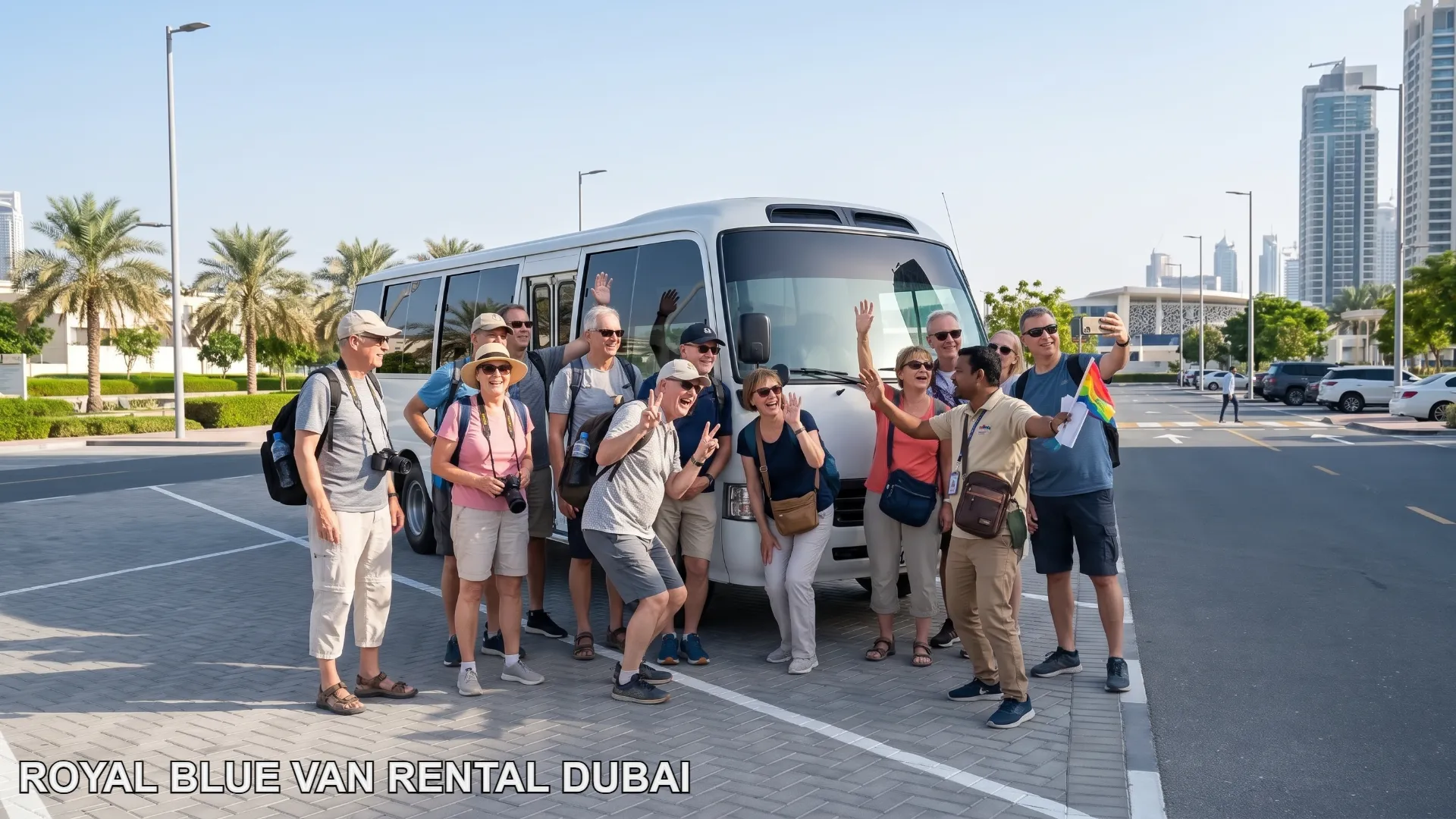
Medium-group travel and coordination
A medium-sized party may include a large extended family, a tour group or several friends travelling on one itinerary. A minibus can help the group share pickup times and reach each planned destination together, subject to the exact vehicle configuration and available luggage space.
For tours, tell the transport team whether guests will board once or at several locations. For airport journeys, identify whether everyone arrives on the same flight and whether large suitcases need to travel in the passenger vehicle.
Confirm the group size against the assigned minibus rather than relying on a broad category label. Also consider how many stops are planned, whether passengers will frequently board and leave, and whether a different size would make the journey more comfortable.
Minibus Services for Different Group Itineraries
Hotel-to-attraction transfers
Suitable to enquire about when a group leaves from one hotel and travels to a planned activity. Confirm the pickup area, passenger count, return requirement and luggage.
Private sightseeing outings
A minibus may support a shared day of sightseeing with several stops. Supply the list of places, expected time at each and final destination for an itinerary-based quote.
Airport group arrivals
For visitors arriving together, send the flight details and bag inventory. Confirm whether the selected minibus can carry both the people and their luggage.
Multiple hotel pickups
A medium group spread across properties may need a pickup sequence. Provide each hotel, number of boarding passengers and desired arrival time.
Family celebrations and outings
A minibus can be considered for transporting a larger family party to a restaurant or gathering. Dedicated wedding transport requirements should be discussed through the relevant specialist service.
Intercity private groups
When travelling beyond Dubai, share the departure city, destination, return arrangements and any intermediate stops so the correct journey can be assessed.
Buses & Coaches for Large Groups
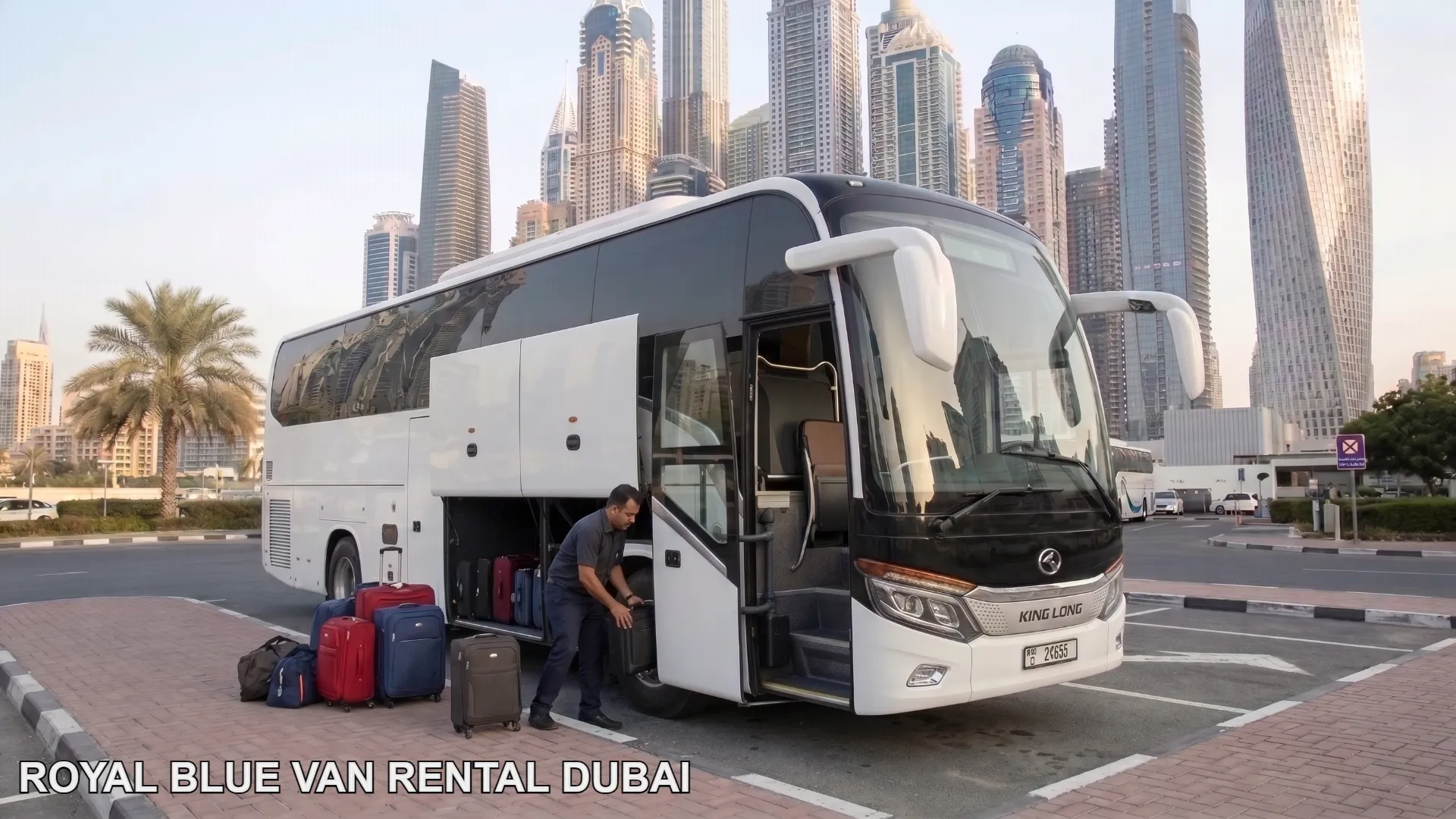
Choosing a coach for a shared group itinerary
Large group transportation Dubai enquiries often involve one organised party leaving from a common location, such as a hotel or meeting point. A bus or coach can be considered when the number of travellers makes smaller vehicles less practical. The right choice still depends on confirmed seats, baggage and route access.
A coach enquiry should include the passenger total, whether guests are carrying luggage, the pickup and drop-off points, travel date, departure time and any planned stops. If the group will be split across several hotels, explain the collection plan rather than assuming one vehicle can serve every stop within the desired schedule.
For especially large parties, one coach may not be enough or may not suit the pickup pattern. Coordinating several vehicles can offer a better match, but it requires passenger lists, clear meeting instructions and realistic departure timing.
35-Seater Bus Group Transportation

When to ask about a mid-size coach
A group that is too large for a minibus but does not require the biggest coach may ask about a bus in the 35-seater category. Treat the vehicle name as a starting point for the enquiry, not confirmation of a particular available seating arrangement.
If your party is close to the nominal vehicle size, clarify whether a driver seat is excluded from the passenger count and whether any equipment or luggage changes the practical arrangement. The booking team should confirm the actual passenger capacity and baggage provision for the vehicle proposed.
The route also matters. A simple hotel-to-destination transfer is different from a tour with multiple short stops. State the itinerary so the quotation reflects the transport actually required.
One Large Vehicle vs Multiple Smaller Vehicles
One shared minibus, bus or coach
One vehicle can simplify the departure plan when everyone starts together, follows the same route and has compatible baggage requirements. Confirm that the proposed vehicle has appropriate seats, luggage capacity and access to each planned stop. One shared vehicle may be less suitable when guests are spread across several distant pickup points or need different departure times.
Several coordinated vans or minibuses
Multiple vehicles can make sense for separate arrival flights, different hotels, staggered departures or a group that exceeds the available capacity of one vehicle. The organiser should provide a passenger allocation, pickup instructions, a lead contact for each vehicle and a clear plan for where everyone meets. Request a quotation for the whole arrangement rather than comparing only individual vehicle prices.
Airport & Hotel Groups
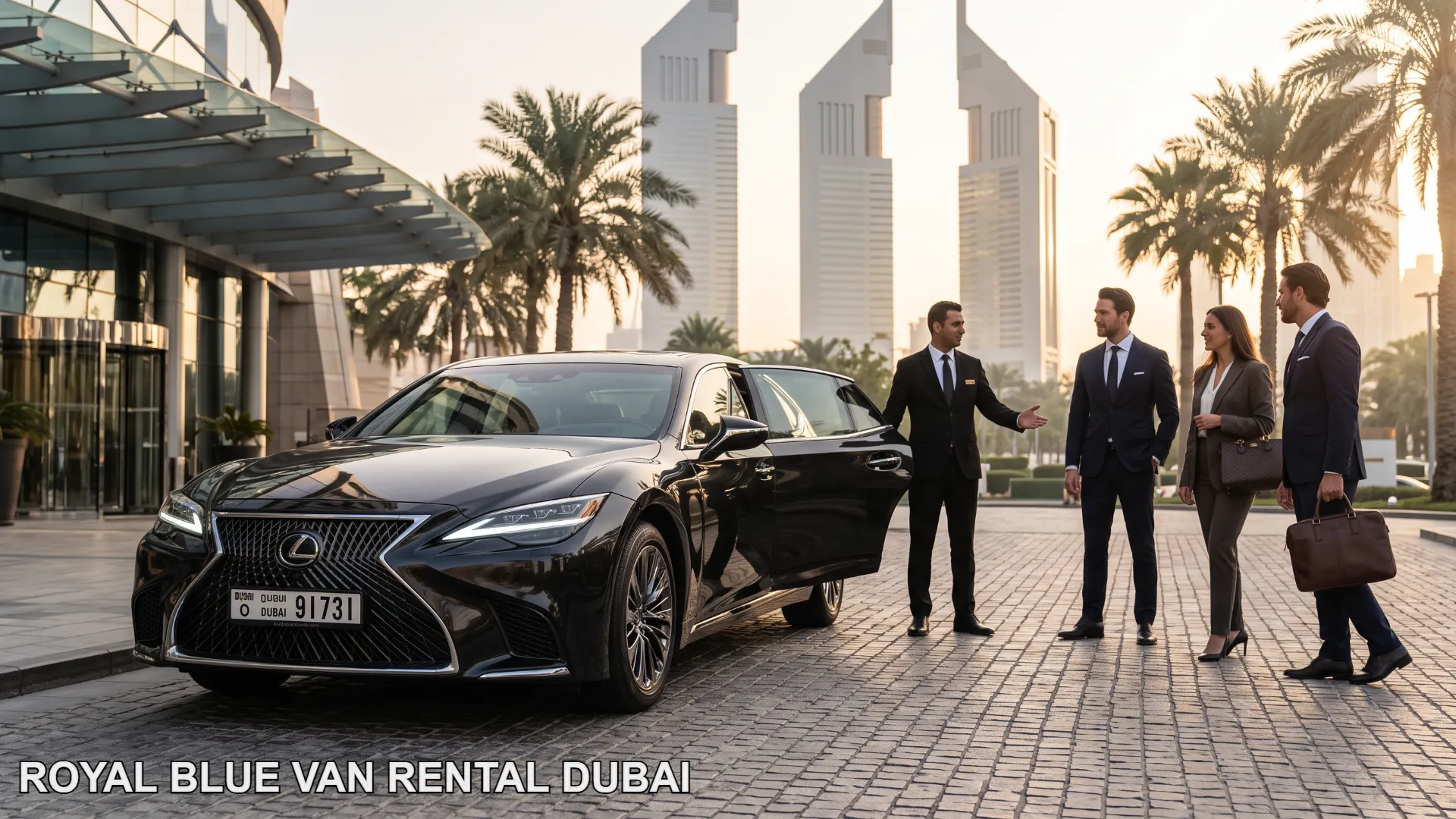
Plan the meeting point before arrival
For an airport group transfer, identify the airport and terminal, arrival date, flight number, passenger count and destination. A group arriving on one flight may be able to travel together, while guests on separate flights might need a meeting plan or different vehicles.
When passengers are arriving from abroad, luggage is often the deciding factor. Give the booking team a realistic count of large checked bags, carry-ons, strollers and unusual items. The transport arrangement should be checked against both seating and baggage needs.
For hotel pickups, provide the full hotel name, collection time and destination. If guests are staying at more than one property, list each pickup with the number of passengers boarding there so a workable sequence can be discussed.
Group Airport Transfer and Hotel Pickup Options
One-flight airport arrival
Share one flight number and terminal for the whole party, plus the hotel or private destination. Confirm the full baggage inventory and the preferred meeting arrangement.
Passengers on separate flights
If travellers arrive at different times, consider whether they should wait to travel together or use separate transfers. Provide each flight’s details and group size.
Hotel-to-airport departure
Provide the pickup address, flight departure details, number of guests and bags. Choose a pickup time with adequate allowance for the journey and airport procedures.
Several hotels, one destination
For a group collected from different hotels, identify each address and passenger allocation. The number of stops can affect journey duration and vehicle planning.
Airport to several hotels
A single arriving group may need different drop-offs. Give the hotel list and intended order so the route can be assessed before confirmation.
Guests with oversized items
Sports bags, large equipment and multiple suitcases may change the appropriate vehicle. Tell the team what must travel with passengers before selecting a category.
Chauffeur-Guided Guest Pickups
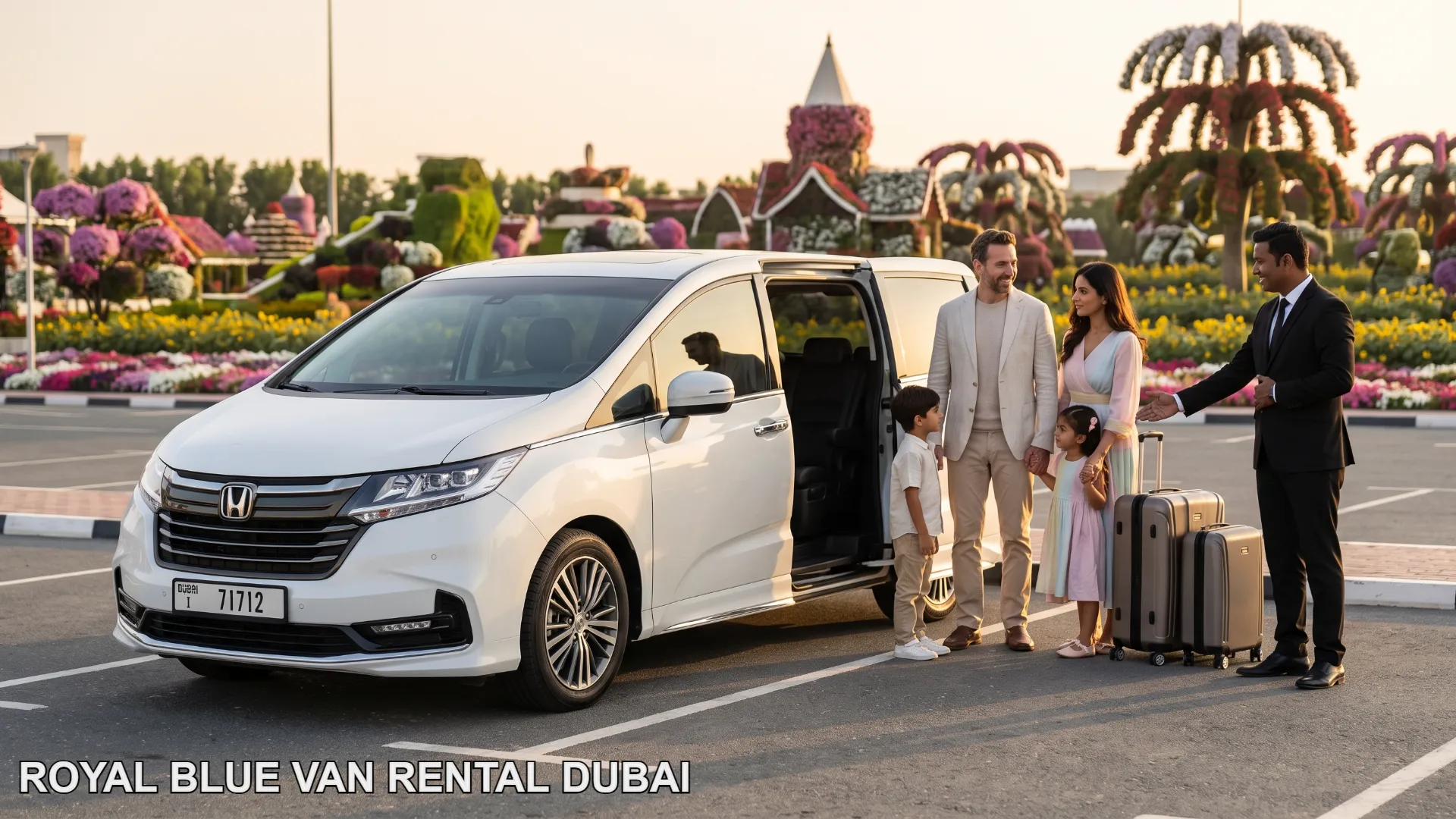
Keep the group plan flexible without losing coordination
Not every member of a large party necessarily travels on the same schedule. Some guests may need a direct transfer while others join a shared minibus or coach. A smaller MPV can be discussed as part of a coordinated transport plan when its seating and baggage arrangement are suitable.
If one household or guest subgroup is travelling separately, give the booking team that subgroup’s pickup time, destination and contact person. This helps prevent confusion between the main group departure and individual guest journeys.
For a hotel event or multi-day visit, keep the transport plan organised by day and vehicle rather than sending unrelated pickup messages. A simple written itinerary makes changes easier to discuss.
Tours & Intercity Groups

Build the route around your group’s pace
A private group tour in Dubai can involve several attractions, meal stops and time for photographs. The useful booking question is not only “How many hours?” but also “Where will we go, and how long do we expect to stay?” Sharing the planned sequence helps identify the most suitable vehicle and service duration.
For an intercity group journey, state the departure point, destination, proposed return time and any planned stops along the way. A direct one-way transfer and a full-day round trip are different transport requirements and should not be assumed to have the same pricing or vehicle schedule.
If your group includes older travellers, children or people who prefer fewer transfers, consider the number of boarding and alighting points. The most efficient itinerary is often one that leaves sufficient time at each destination rather than adding too many stops.
Types of Group Tours and Private Trips
Dubai city sightseeing
A group may want to visit several attractions during the same outing. Share the chosen places, meeting point, expected duration and final drop-off.
Hotel-based visitor itinerary
Visitors staying at one hotel may request several outings on different days. Identify each day’s route separately to avoid mixing transfers and full-day journeys.
Dubai to Abu Dhabi group travel
For a journey between Dubai and Abu Dhabi, provide the exact starting point, destination, passenger count and whether a return journey is needed.
Other intercity destinations
For travel beyond Dubai, name the city or area, departure time and expected return. Confirm the route and vehicle suitability before booking.
Shopping and dining groups
A shared vehicle may suit a group visiting shopping destinations or restaurants. Consider the number of stops, waiting time and bags acquired during the outing.
Family reunion day trips
For relatives travelling together, a group vehicle may simplify pickup and return arrangements. Confirm accessibility needs and whether some guests need earlier drop-offs.
Multi-day private visits
When transport is needed across several days, provide a day-by-day outline. Each day may require a different duration or vehicle arrangement.
Visitors with changing schedules
If the itinerary is still being developed, identify which details are fixed and which are tentative. A clear preliminary outline is more useful than an assumed all-inclusive arrangement.
Wedding Guests and Private Celebrations
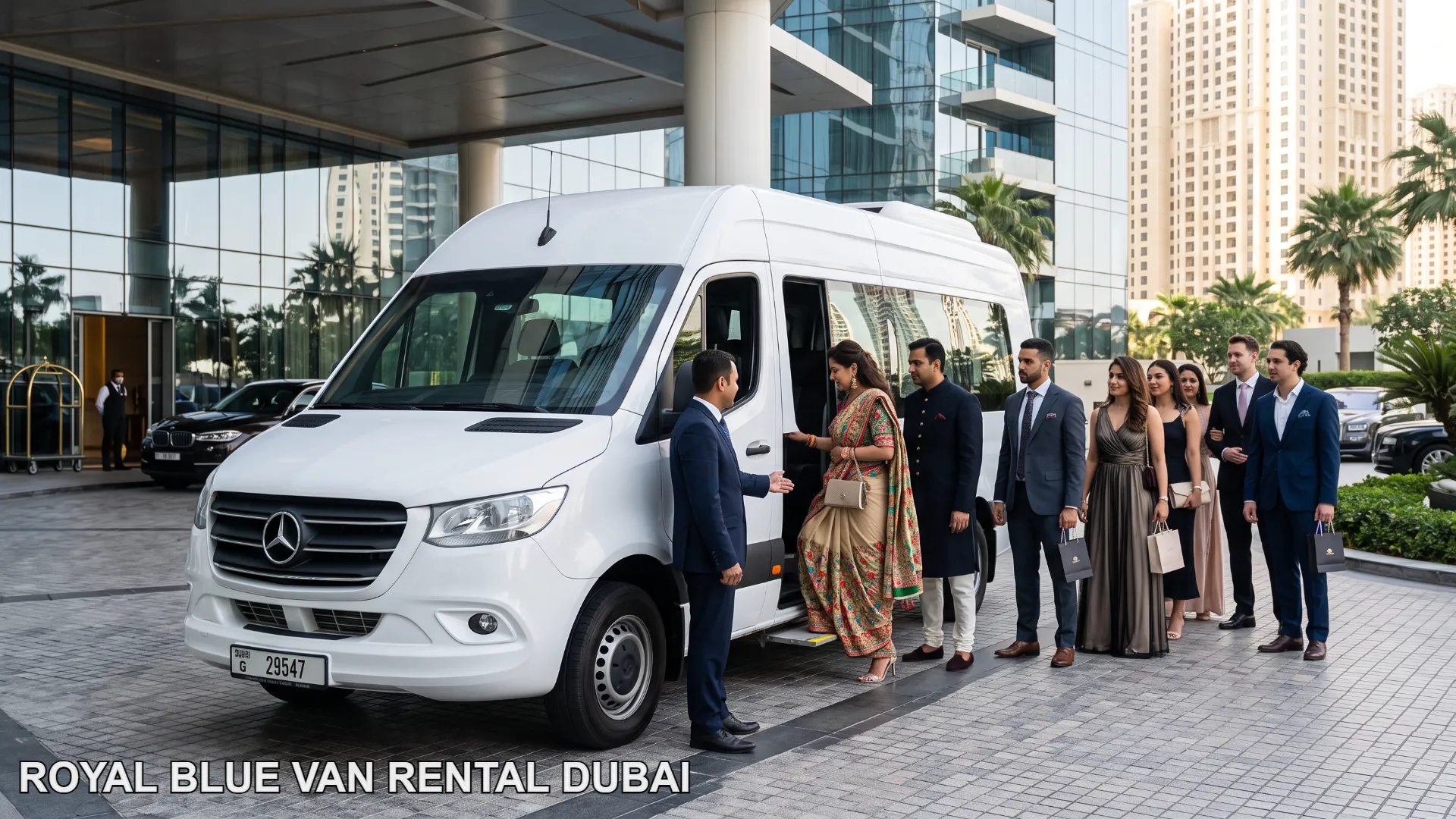
Keep the general group booking distinct from an event plan
Family celebrations and private gatherings can involve guests who need to reach the same venue. The basic group transport questions remain the same: how many people, where they start, where they are going, what time they must arrive and whether a return journey is needed.
Wedding guest transport can require additional event-specific coordination, such as separate guest groups and staged departures. This page introduces the vehicle-selection considerations, but a detailed wedding transport programme should be discussed as its own service rather than treated as a standard one-way transfer.
If guests are staying at multiple hotels, prepare a simple pickup list with the passenger count at each property. This is useful whether the final arrangement uses one larger bus or several smaller vehicles.
SUV and Sedan Options for Smaller Subgroups
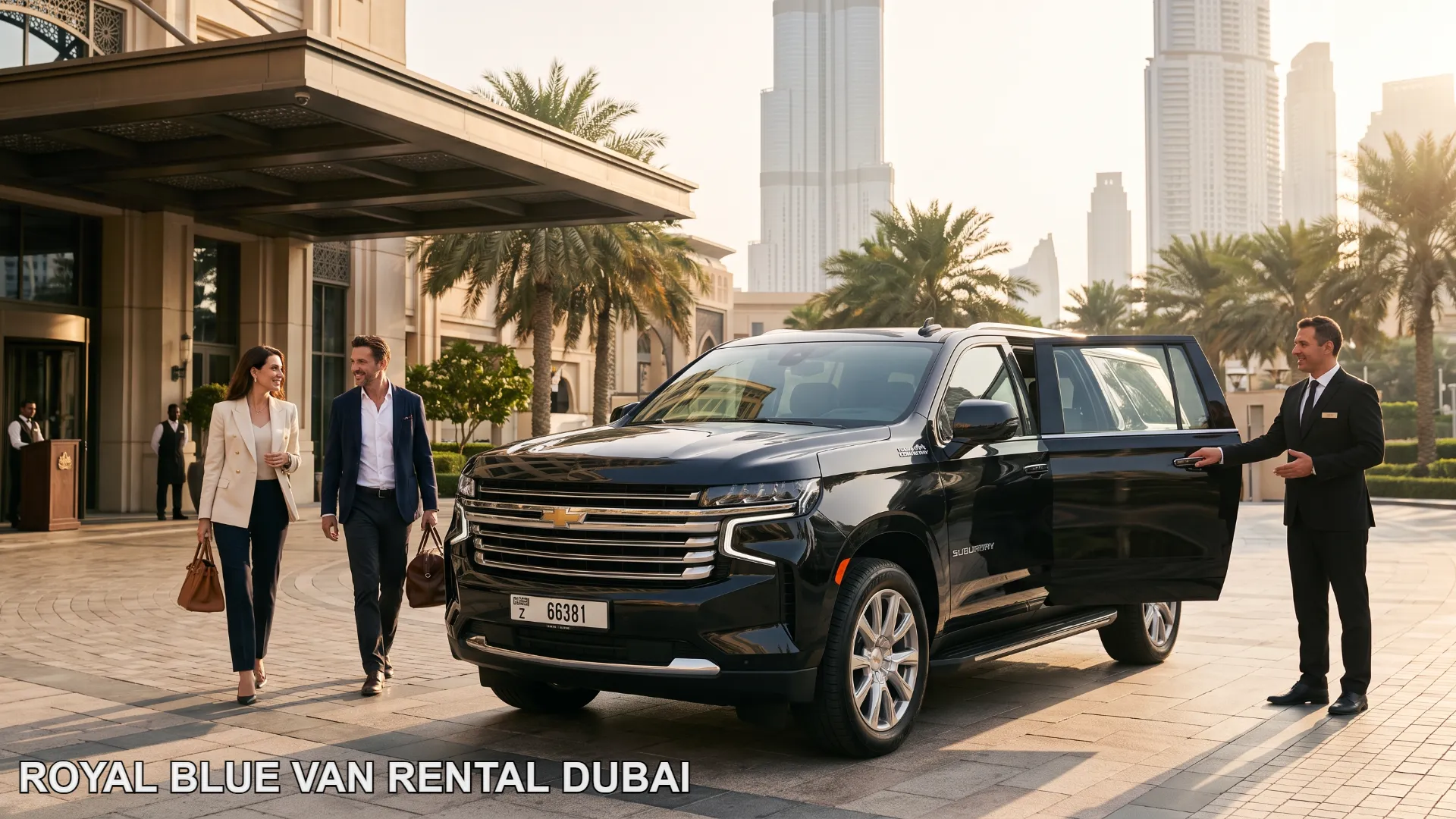
Use smaller vehicles for a clear reason
A Chevrolet Suburban, Lexus sedan or other chauffeured vehicle can be discussed when a small subgroup has its own pickup or destination. Such vehicles are not presented as solutions for transporting an entire large group, and their suitability depends on the actual number of passengers and bags.
For example, a larger party may travel by coach while a few guests require an earlier hotel departure. Keeping those journeys separate can make the plan easier to understand, provided every vehicle is assigned a clear passenger list.
Before selecting a particular SUV or sedan, confirm the passenger and luggage arrangement. A vehicle image can illustrate a service style, but it cannot establish capacity or availability.
Group Transport Vehicle Gallery
What the Group Transportation Photos Can and Cannot Tell You
The photographs above show different kinds of passenger vehicles and guest experiences, including chauffeured cars, family MPVs, passenger vans, minibuses and buses. They help you understand the broad choices for small, medium and large parties. They are not a promise that every pictured vehicle is available for a particular date or that every pictured model has a fixed seating layout.
When choosing from a gallery, use the picture to identify the vehicle type you prefer, then verify its practical suitability. Confirm the number of passenger seats, luggage space, pickup requirements and any special equipment before agreeing a booking.
If a photograph shows guests being welcomed into a vehicle, treat it as an illustration of the travel experience rather than proof of an included meet-and-greet service. The quotation should define exactly what is included for your journey.
Compare Different Fleet Types for Group Transportation
7-seater chauffeured car
For a small party, compare seating comfort and bag space against the group’s needs. This category is less appropriate when the whole group has a large luggage inventory.
8-passenger van
Worth comparing for a private family or friends’ itinerary. Confirm the passenger seats available and whether baggage will fit when the group is fully seated.
Hyundai H1
A passenger van model to consider for shared city journeys, hotel transfers and family travel. Interior configurations may vary.
Mercedes Vito
A van option for travellers comparing smaller-group passenger transport. Confirm the specific vehicle, service duration and baggage arrangements.
Kia Carnival
An MPV-style option for family parties and private groups. Discuss children, pushchairs and checked suitcases when planning an airport trip.
Honda Odyssey
Another MPV to compare for private travel. Suitability depends on the actual cabin layout and the passengers travelling.
13-seater-category minibus
A step toward a minibus when smaller vans do not meet the group requirement. Verify the real seating and luggage arrangement.
Toyota Coaster minibus
A category to discuss for medium-sized groups and organised outings. The quoted configuration should be matched to the full passenger list.
35-seater-category bus
Consider for a group that needs more seats than a smaller minibus can provide. Confirm the coach layout and pickup access.
50-seater-category coach
A large-group transport option for coordinated travel. Confirm seats, baggage provision, itinerary and any access limitations before booking.
Chevrolet Suburban
May suit a smaller guest subgroup or separate transfer, subject to confirmed passenger and luggage space.
Lexus sedan
Relevant for a small individual guest transfer rather than an entire large group. Confirm whether it serves a separate part of the overall transport plan.
Group Transport Rates: What Affects the Quotation
How much does group transportation cost in Dubai? There is no single reliable price for every group journey. A quote depends on the vehicle category, travel date, pickup and drop-off points, service duration, route, number of vehicles and any additional arrangements required. The passenger count matters because it affects which vehicle can be used, but two groups of the same size may still need very different services.
A direct hotel-to-destination journey can be simpler to quote than a day involving multiple stops and waiting periods. Likewise, a single group arriving together may need a different arrangement from guests arriving on separate flights. Provide the actual schedule rather than assuming that a fixed daily rate applies to all situations.
For general information about the types of journeys and indicative pricing categories, consult the Dubai transport rates page. Treat any general rate as a starting point only. A group quotation should identify the vehicle or vehicles, journey, dates and applicable booking terms before payment or confirmation.
Ask for the quote to state whether the proposed arrangement covers a one-way journey, return transfer, hourly use or a longer itinerary. Any parking, toll, waiting, additional-hour or other charges should be confirmed in the quotation rather than inferred from this guide.
Group Transportation Rate and Booking Types
No unverified fixed prices are shown. Each option requires confirmation of the itinerary, suitable vehicle and applicable charges.
| Transport option | Typical booking pattern | Pricing approach |
|---|---|---|
| Private small-group transfer | One pickup and one destination | Quote based on passenger count, baggage and route |
| Group airport arrival | Airport terminal to hotel or other address | Quote based on flight, baggage and vehicle |
| Group airport departure | Hotel or meeting point to airport | Quote based on pickup schedule and vehicle |
| Hourly group booking | Vehicle required for an agreed duration | Quote based on hours, stops and route |
| Private sightseeing itinerary | Several attractions or destinations | Quote based on planned itinerary and waiting |
| Intercity group journey | Dubai to another city or return | Quote based on route, duration and vehicle |
| Multiple-vehicle group booking | Two or more coordinated vehicles | Quote based on allocation and full schedule |
Details to Confirm Before Accepting a Group Transport Price
Vehicle and seating
Ask which vehicle category and seating arrangement are being offered. If several vehicles are needed, request the proposed allocation.
Journey scope
Check whether the quotation covers a direct transfer, return trip, waiting time, hourly booking or a complete itinerary.
Pickup and drop-off points
Confirm the actual addresses and number of collection or drop-off locations. An extra stop can change the journey plan.
Baggage and equipment
Ask whether the assigned vehicle accommodates the stated bags, strollers or other items. Never assume space based on a photograph.
Timing and delays
Discuss the agreed pickup time, flight details where relevant, and how changes or delays will be handled.
Charges and payment
Ask for the applicable payment terms and any additional charges in writing. Do not assume that tolls, parking or waiting are included.
Contact and coordination
Identify the organiser and a contact person for each separate vehicle when several are booked.
Changes and cancellation
Ask how changes to passenger count, timing, vehicle requirement or itinerary affect the confirmed arrangement.
How to Choose a Vehicle for Your Group
Start with the actual headcount and luggage inventory. Then decide whether the group must stay together for the entire trip. A private van can be a good starting category for a smaller party; a minibus becomes relevant when a smaller vehicle does not fit; a bus or coach is worth comparing for a larger organised group. None of those categories should be selected from passenger count alone.
Next, examine the route. One pickup and one destination are usually easier to coordinate than several hotel collections followed by multiple sightseeing stops. The larger the group, the more useful it is to have one organiser who can share accurate addresses, a passenger list and a realistic schedule.
Finally, check the details that photos and vehicle names cannot establish: usable seats, luggage arrangement, child seating needs, accessibility, availability for the requested date and the precise quotation. If the group cannot fit comfortably, ask about a larger vehicle or a coordinated multi-vehicle booking.
A customer asking for “transport for twenty people” may be describing a sightseeing group with day bags, an airport arrival with checked suitcases or a mixed group departing from several hotels. Those scenarios can call for different arrangements. Describe the journey rather than choosing a vehicle only from a headline seat number.
Choose by Journey Requirement, Not Just Vehicle Size
Is one vehicle essential?
If the group wants to travel together, check whether one suitably sized vehicle can meet both seating and baggage requirements.
Are there separate flight arrivals?
Consider different pickup times or several vehicles when travellers cannot realistically meet at the same time.
Is there substantial luggage?
Baggage may make a larger vehicle more appropriate even when a smaller one has enough seats.
Will the group make many stops?
A multi-stop itinerary should include expected waiting and boarding time, not just the distance between locations.
Does anyone need special assistance?
Explain accessibility, child seating or other practical needs early so suitability can be checked.
Are return times different?
A split departure plan may work better than asking everyone to leave at the same time.
Direct Group Transfer vs Hourly Group Transport
Direct transfer
Choose this booking pattern when the group has a clear pickup point and destination, such as an airport arrival, hotel departure or trip to a private address. Tell the team the passenger and baggage details and whether the journey is one-way or return. If extra stops are required, include them in the enquiry rather than assuming they are part of a direct transfer.
Hourly or itinerary-based booking
Consider this pattern when the group expects several stops, sightseeing, shopping or a period during which the vehicle may need to remain available. Supply the intended route, approximate duration and waiting requirements. A quotation should explain the agreed service period and any conditions affecting changes or additional time.
Group Transportation Across Dubai and Intercity Journeys
Group transport enquiries can involve airport terminals, hotels, residences, attractions and other meeting points around Dubai. The useful location detail is the actual address or agreed collection point. A broad neighbourhood name may not be sufficient for a driver or for a realistic multi-stop route.
For groups staying in areas such as Dubai Marina, Downtown Dubai, Business Bay, Jumeirah or Deira, share the hotel or property name and the exact pickup arrangement. These names are examples of common journey planning areas, not a claim that a specific pickup, permit or route has been confirmed.
When the trip includes destinations outside Dubai, state the city and exact endpoint. Groups may enquire about journeys involving Abu Dhabi, Sharjah, Ajman or other UAE destinations, but route suitability, timing and availability must be confirmed for the proposed booking.
If the group wants several stops in one day, write them in the intended order and mark which are essential. This helps the transport team identify a sensible vehicle arrangement and clarify whether the proposed timing is realistic. A plan that is easy to understand is usually easier to quote accurately.
Group Transportation by Location and Journey Purpose
Dubai airport to hotel
Provide flight and terminal details, hotel name, passenger total and suitcase count. Confirm the arrival meeting arrangement.
Hotel to Dubai airport
Provide the hotel address, flight departure details, pickup time and all luggage requirements.
Dubai Marina group outing
For guests starting from Dubai Marina, provide the exact property and destination list, especially if several buildings are involved.
Downtown Dubai sightseeing
For a group beginning near Downtown Dubai, clarify the meeting point and whether the journey includes multiple attractions.
Business Bay hotel pickup
When guests are spread across hotels or offices in Business Bay, list each collection address and passenger count.
Jumeirah private group visit
For a private gathering or outing in Jumeirah, identify the precise address and any access instructions.
Deira hotel group transfer
For a group leaving a Deira hotel, state the hotel, departure time and whether luggage is travelling with passengers.
Dubai to Abu Dhabi group trip
Share the exact endpoints, date, return plan and expected stops. Confirm the vehicle category and journey terms.
Dubai to Sharjah group travel
Describe the route and timing, especially if the group needs to arrive for a scheduled activity.
Dubai to other UAE destinations
Provide the destination and full itinerary for an assessment rather than assuming every route follows the same service conditions.
Booking Multiple Vehicles for One Group
When one vehicle does not meet the group’s seating, baggage or scheduling needs, a multi-vehicle arrangement may be considered. This is especially relevant when travellers are spread across different hotels, arrive on separate flights or need different departure times. The goal is not simply to add more vehicles, but to make the group movement easy to coordinate.
Start by dividing the group into clear passenger lists. For example, each vehicle should have an agreed pickup point, number of travellers, destination and contact person. If there are children or passengers requiring assistance, include those needs in the relevant vehicle allocation.
If several vehicles must reach the same destination, communicate the intended arrival window and any meeting instructions. Do not assume that separate vehicles will always travel together or arrive simultaneously; traffic, pickup order and route details may differ.
Ask for a consolidated quotation that describes the number and type of vehicles and the journey assigned to each. This makes it easier to compare a coordinated booking with the alternative of one larger bus or coach.
How to Coordinate a Multi-Vehicle Booking
Create one master passenger count
Record the total number of people, then assign each subgroup to a vehicle only after the proposed seating is confirmed.
Assign a lead contact
Choose a main organiser and, where practical, a contact person for each vehicle so passengers know whom to reach.
Use exact pickup instructions
Share the hotel, entrance or meeting point rather than a general neighbourhood name.
Keep baggage with the right passengers
Check whether the planned vehicle has sufficient space for its assigned group’s bags and special items.
Confirm the final destination
Different subgroups may have different drop-offs. Record them clearly to avoid confusion.
Agree how changes are communicated
Ask how revised flight times, added passengers or route changes should be sent before the journey.
Group Transport for Families, Tourists and Private Parties
Family groups: A family booking often needs one shared vehicle and a straightforward itinerary, but luggage, child seats and pushchairs can influence the category. Discuss these needs before deciding between an MPV, van or minibus. If relatives are joining from different addresses, make that part of the pickup plan.
Tourist groups: Visitors may prioritise staying together during sightseeing and reaching the next stop without coordinating separate taxis. For a private group tour, provide the destinations and expected duration. A larger party may find a minibus or coach more appropriate than several small vehicles, depending on its route and baggage.
Friends and private parties: A shared vehicle may simplify travel to a restaurant, attraction or private gathering. Tell the booking team whether the trip is one-way, return or part of an extended evening itinerary. If people plan to leave at different times, separate transfers may be worth discussing.
Mixed-age groups: Groups including children and older relatives may need more time to board, fewer transfers or different seating arrangements. These considerations can matter more than choosing the smallest vehicle that appears to fit the headcount.
Organised groups with specialist needs: Some enquiries are primarily for weddings, employee transport or formal corporate programmes. This general page explains vehicle selection, but detailed event timetables, recurring staff routes and corporate contract arrangements belong to the relevant specialist service discussions.
How to Book Group Transportation in Dubai
Booking starts with a clear description of the journey. Provide the travel date, expected pickup time, starting point, destinations, number of passengers and luggage inventory. If you have a preferred vehicle type, mention it, but allow the suitability of the actual vehicle to be checked.
For airport bookings, add the flight number and terminal. For sightseeing, send a list of attractions and approximate duration. For intercity trips, provide the departure city, destination and whether a return journey is needed. For multiple vehicles, include the proposed passenger split and separate pickup details.
Before confirming, review the vehicle category, actual seating and baggage suitability, service duration, price, charges and booking conditions. Keep the agreed itinerary and contact details available to the group organiser so the journey can be coordinated.
From Enquiry to Group Pickup
Send your group details
Share the travel date, pickup time and location, destination or route, passenger count and baggage. Include any children, accessibility needs or special equipment.
Compare the suitable vehicles
Ask the team to assess whether a passenger van, minibus, coach or several vehicles best fits the passengers, luggage and itinerary.
Review the quotation
Confirm the proposed vehicle arrangement, journey scope, agreed timing, applicable charges and booking terms before proceeding.
Confirm the journey plan
Keep the agreed pickup instructions and organiser contact details together. For several vehicles, ensure each subgroup knows its allocation and meeting point.
What to Include in Your Group Transport Enquiry
Example: family airport arrival. “We are travelling together on one flight and need a transfer from the airport to our hotel. Here is the arrival date, flight number, terminal, total number of adults and children, number of large suitcases and any stroller.” This gives the booking team more useful information than asking only for a “family van.”
Example: medium-size sightseeing party. “We need a vehicle for our group from one hotel, visiting several places in Dubai before returning to the hotel. Here is the date, number of passengers, desired start time, list of stops and approximate finish time.” This clarifies that the request is itinerary-based rather than a simple one-way transfer.
Example: large group hotel transfer. “Our party is staying at two hotels and needs to reach one destination by a particular time. Here are the hotel names, the number of guests at each, the travel date and whether luggage is included.” This helps determine whether one larger vehicle or several vehicles would make more sense.
Example: intercity group journey. “We want to travel from Dubai to another UAE city, with a planned return. Here are the pickup and destination addresses, departure and return times, group size and baggage details.” The exact route and duration can then be considered in the quotation.
Preparing Your Group for a Smooth Departure
Once the journey is agreed, send each passenger the meeting point, meeting time and name of the group organiser. For an airport pickup, distinguish between the scheduled flight arrival and the time at which everyone expects to be ready to leave the terminal. Groups travelling with children, checked baggage or passengers arriving on separate flights may need additional time to gather. These practical details are best discussed before the travel day, not left to an assumption that all guests will be ready together.
For hotel-based groups, ask the organiser to confirm which entrance or collection area is appropriate for the proposed vehicle. A van, minibus and large coach may not use the same pickup location at every property. The hotel name alone may not identify the best place for passengers to assemble. Share the confirmed meeting instructions with everyone and encourage the group to be ready together at the agreed time.
If the itinerary includes several stops, nominate one person to communicate the group’s movements. That contact can help everyone understand when to return to the vehicle and which destination comes next. For multi-vehicle bookings, use a separate contact for each subgroup while retaining one overall organiser. This is especially useful when the vehicles follow different pickup routes before meeting at a shared destination.
Keep the booking details together: the quoted vehicle arrangement, confirmed pickup and destination addresses, passenger totals, luggage information and the agreed service duration. If the plan changes, tell the transport provider promptly and ask whether the revised journey affects the vehicle, timing or price. A clear written itinerary helps a private group enjoy its visit without spending unnecessary time reorganising transport between stops.
Group Transportation Dubai FAQs
Straight answers to common questions about choosing vehicles, planning group journeys, airport pickups, luggage and quotations.
What is group transportation in Dubai?
Group transportation is shared passenger travel for people following the same journey. Depending on the group, it may use a van, minibus, bus, coach or several coordinated vehicles.
What vehicle is best for my group size?
Start with the exact passenger count, then check luggage, route and seating requirements. A smaller group may consider a van or MPV; a medium group may need a minibus; a larger party may need a bus, coach or multiple vehicles. Confirm the actual capacity before booking.
Can you transport groups with luggage?
You can enquire about group transport with luggage. Share the number and size of checked bags, carry-ons, strollers and bulky items so the proposed vehicle can be checked for suitability.
Can I book multiple vehicles?
You can request a coordinated multi-vehicle quotation. Provide the total headcount, preferred passenger allocation, pickup points and journey times.
How much does group transportation cost in Dubai?
The cost depends on the vehicle arrangement, route, date, duration, number of stops and other booking details. Request a quotation rather than assuming a universal group rate.
Can I arrange group airport transfers in Dubai?
You can request a group airport arrival or departure transfer. Provide the airport, terminal, flight details, passenger count, luggage and hotel or destination.
What if my group arrives on different flights?
List each flight and arrival time. The booking team can assess whether the group should travel together after meeting or use separate transfers.
Can a group travel from Dubai to Abu Dhabi?
You can enquire about an intercity group journey. Provide the exact pickup and drop-off locations, travel date, passenger count and return requirements for a route-specific quotation.
Is a minibus better than several cars?
A minibus may be more convenient when the group shares one pickup, route and schedule. Several cars or vans may be more practical when travellers have different pickup points or departure times.
Can I request a 13-seater minibus?
You can enquire about that vehicle category. Confirm the actual usable passenger seats, luggage arrangement and suitability for your journey.
Can I request a Toyota Coaster for my group?
You can ask about a Toyota Coaster minibus. Supply the headcount and luggage details so the assigned vehicle configuration can be assessed.
Do you have buses for large groups?
This page covers enquiries for large-group bus and coach transportation. Vehicle type, passenger capacity and availability need confirmation for the requested journey.
Can I book a 35-seater or 50-seater-category bus?
You can request a quotation for these bus categories. Confirm the assigned vehicle’s usable passenger capacity, luggage arrangements and suitability before booking.
Can I arrange hotel pickup for a tourist group?
You can request hotel-based group transport. Provide the exact hotel name, passenger count, pickup time, destination and any additional stops.
Can a group be collected from several hotels?
You can enquire about multiple hotel pickups. Share every hotel address, number of guests boarding and desired arrival time so the route can be assessed.
Can I book a vehicle for Dubai sightseeing?
You can request a private sightseeing itinerary. Provide the attractions, planned stops, start and end locations and approximate duration.
Is hourly group transportation available?
You can request a quote for an hourly or itinerary-based booking. The actual duration, vehicle arrangement and booking terms must be confirmed.
Can I arrange group transportation for a full day?
You can enquire about an extended group booking. Share the day’s route, expected hours, stops and passenger details to obtain a suitable quotation.
Can I book group transportation for several days?
You can request a multi-day itinerary quotation. List the route and expected duration for each day, as requirements may differ.
Can families travel together with children?
Family group transport can be discussed, but tell the team the ages or child seating needs, total passengers, strollers and luggage so vehicle suitability can be checked.
What if our luggage will not fit in one vehicle?
Ask about a larger vehicle or an alternative coordinated arrangement. Passenger seats and baggage space must both be appropriate; never assume bags can be accommodated simply because seats are available.
Can we make several stops during the trip?
You can request a multi-stop itinerary. List the locations and expected waiting periods so the service can be assessed and quoted accordingly.
How early should we book group transport?
Send the enquiry as soon as the group size, travel date and basic itinerary are known. Availability for any particular vehicle or date must be confirmed rather than assumed.
What information do I need for a group quotation?
Provide the date, pickup time, addresses, passenger count, luggage, journey type, duration and any flight details or separate vehicle requirements.
Are parking, tolls and waiting included in the price?
Do not assume these items are included. Ask the booking team to state the applicable inclusions, additional charges and conditions in the quotation.
Can I change the group size after booking?
Ask the booking team about the proposed change before the journey. A different passenger count may affect vehicle suitability, price or availability.
What is the difference between a group transfer and a group tour?
A transfer primarily moves passengers between agreed points. A tour or itinerary-based booking may involve several destinations and waiting periods, so it should be quoted against the complete plan.
Is group transportation suitable for private celebrations?
A private gathering may use group transport when guests share a journey. Complex wedding or event arrangements should be discussed as a specialised transport requirement.
Can a smaller subgroup travel separately from the main party?
You can request a separate vehicle for guests who need another pickup or departure time. Provide the subgroup’s passengers, luggage and route so the whole arrangement can be coordinated.
How do I request a group transportation quote?
Contact Royal Blue with the travel date, group size, pickup and destination details, luggage and itinerary. Ask for a confirmed vehicle arrangement and written quotation.
More Royal Blue Transport Information
Request Group Transportation in Dubai
Tell us how many people are travelling, how much luggage they have, where they need to go and when. Request a suitable van, minibus, bus, coach or coordinated multi-vehicle quotation for your group.