What Size Van Do I Need in Dubai?
Choose a practical starting vehicle category for seven to fifteen passengers. Compare seating, bags, airport journeys, family groups and the point at which a minibus may make more sense.
What Size Van Do I Need for My Group?
Quick Size Selector
The most useful van-size question is not simply “How many seats does the vehicle advertise?” It is “How many usable passenger seats remain when we account for the exact vehicle layout and everything our group is bringing?” A group with backpacks needs a different assessment from an equally sized group arriving with large checked suitcases.
Use this selector as a starting point. The categories reflect the passenger groups discussed in this guide; actual seating depends on the selected vehicle and its approved configuration. We confirm the model, usable passenger seats and luggage arrangements before treating a proposed option as suitable.
For customers exploring passenger van rental Dubai, this decision guide is designed to help you ask the right questions. The linked service pages explain individual vehicle categories, while this article concentrates on matching group size to the trip.
| Traveling passengers | Category to investigate | Most important check |
|---|---|---|
| 7–8 | 7–8-passenger car, SUV or van configuration | Rear storage with every required seat in use |
| 9–10 | 10–12-passenger minivan or passenger van configuration | Actual seat layout, suitcase count and access |
| 11–12 | 12–13-passenger van configuration | Seats for all travelers and usable baggage area |
| 12–13 | 12–15-passenger van configuration | Whether your exact configuration seats the whole group |
| 14–15 | 14–15-passenger van or minibus evaluation | Full seating plus airport luggage, if any |
| More than 15 or unusually bulky baggage | Minibus or multiple-vehicle assessment | Group comfort, total storage and pickup coordination |
How to Count Passengers Before Choosing a Van
Count everyone who needs a seat, including children. Do not assume a child can share an adult seat or that luggage can occupy the same space as a seated traveler. When discussing a vehicle advertised with a particular number of seats, ask whether the number refers to passenger seats or total seats including the driver.
Make one final passenger list rather than relying on a rough estimate from the group organizer. A change from ten travelers to eleven can alter which configuration is appropriate, even if the journey is short. Keep the same passenger count for both pickup and return unless the group changes.
Consider how your travelers will use the cabin. Colleagues carrying laptops, older guests who appreciate easier access, families supervising children and visitors spending hours between stops may prefer a layout that feels less crowded than the smallest technically adequate option.
If you have not finalized the group, share the likely range instead of selecting a vehicle based on the minimum number. It is easier to evaluate an appropriate configuration in advance than to discover at pickup that one extra passenger or suitcase changes the plan.
7–8 Passengers: Which Vehicle Works?
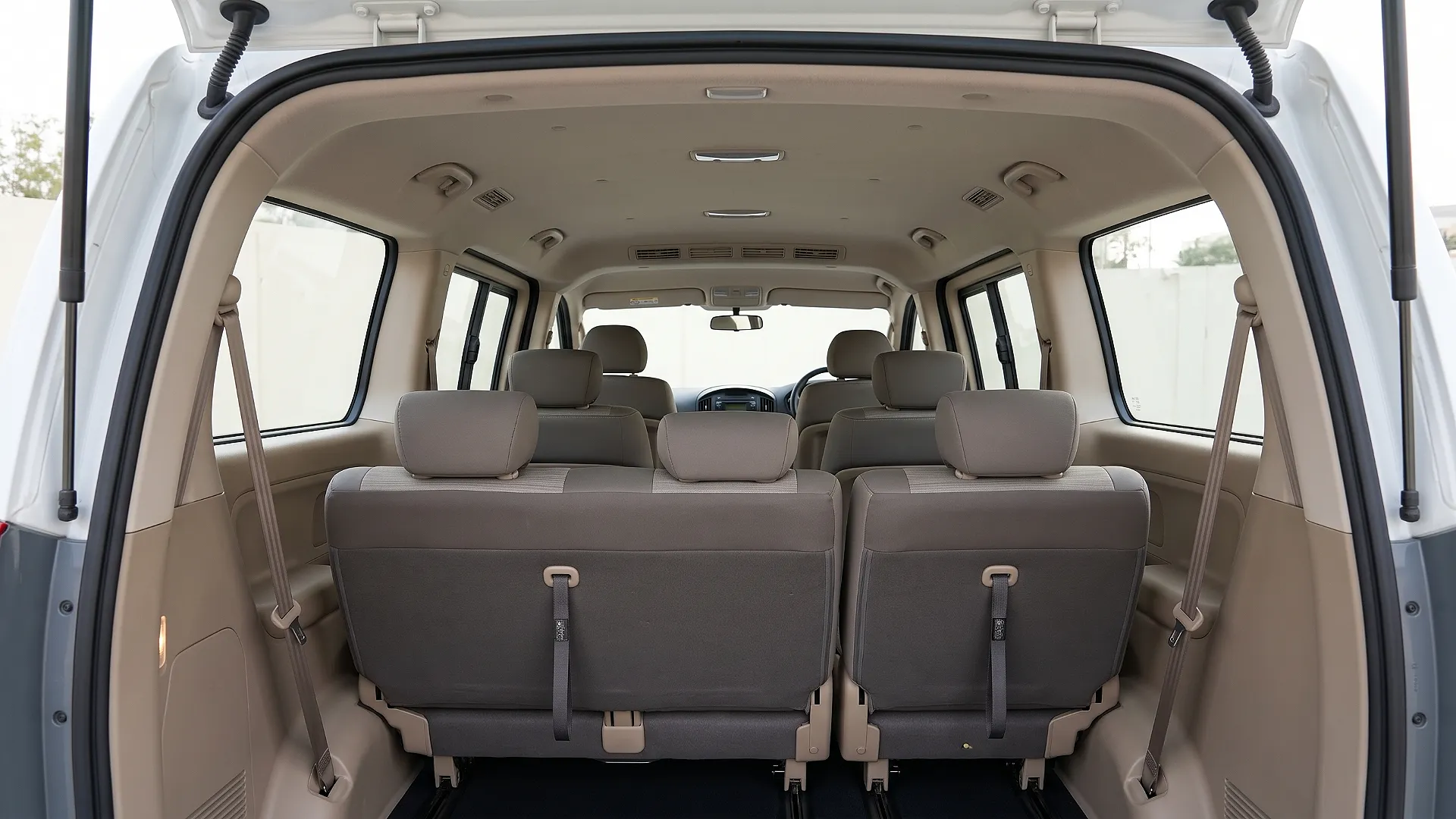
A small group is not always a light-luggage group
Seven or eight travelers may investigate a 7–8-passenger vehicle configuration. This category is commonly relevant to families, small private groups and colleagues moving together, but the available luggage area must be checked when all seats are needed.
For an airport arrival, the important question is whether large checked suitcases can fit in a designated storage area while passengers remain seated safely. For a city outing with light personal bags, the same group may have a different practical requirement.
A seven- or eight-passenger group with strollers, several large suitcases or equipment may be better served by a larger vehicle than a nominally matching seven- or eight-passenger configuration. Compare the full journey requirements rather than choosing by the passenger count alone.
Explore our 7–8-seater vehicle options when you want to compare the category in more detail.
7–8 Passenger Booking Considerations
Ask whether the rear-most seats are required for your group. In some vehicle layouts, using all passenger seats changes the area available for luggage. We should therefore check the actual cabin and baggage configuration rather than applying a generic suitcase estimate to every seven- or eight-passenger vehicle.
For families, list child seats and strollers separately from ordinary bags. A folded stroller can have an awkward shape even when it is not especially heavy. Likewise, a wheelchair or other mobility equipment needs a specific storage and access assessment, not an assumption based on the advertised seat count.
For business visitors, consider the number of laptop cases and briefcases alongside checked luggage. Even when these items are small, they should be stored appropriately rather than occupying aisles or creating discomfort for passengers.
9–10 Passengers: Choosing a Minivan or Passenger Van
Check the exact seating configuration
For nine or ten passengers, begin by comparing 10–12-passenger configurations. The word “minivan” is used differently across markets and vehicle models, so it is more reliable to confirm the actual number of passenger seats than to depend on the category name.
Ten people traveling with day bags may have a different requirement from ten people carrying checked luggage for an international flight. For the airport group, a larger van can be worth considering even when the smaller configuration has enough seats.
When reviewing a proposed vehicle, ask for the seating arrangement, entry and exit access, and where bags will be placed. The objective is to avoid a layout that technically seats everyone but leaves no practical room for the luggage you need to bring.
If some travelers join at a second location, include them in the maximum passenger count for the part of the route where everyone is aboard.
9–10 Passenger Booking Considerations
The main planning challenge at nine or ten passengers is that you may be close to the usable seating limit of a particular configuration. Ask us to check the selected vehicle rather than assuming every minivan offers the same arrangement.
Consider whether the group needs to remain together for airport transfers, a wedding, a meeting or a multi-stop itinerary. One suitably configured vehicle can simplify coordination, but splitting the group may be reasonable when luggage or pickup arrangements make a single-vehicle solution unsuitable.
Share both the outbound and return journey requirements. Airport departure bags are sometimes different from arrival bags after shopping or additional travel. If you expect extra luggage on the return, mention that when selecting the vehicle.
12–13 Passengers: Choosing a Larger Van

Choose by confirmed seats, not model name alone
For twelve or thirteen travelers, investigate a passenger van configured with sufficient passenger seats. A Toyota Hiace-style vehicle is one category to discuss, but seating can differ between individual vehicles and conversions.
A twelve-passenger group with little luggage might be assessed differently from thirteen travelers with thirteen large suitcases. Once nearly every seat is occupied, the baggage arrangement becomes especially important and may justify evaluating a larger category.
We recommend sending the exact passenger count, ages where child seats matter, number and approximate size of suitcases, and whether you have strollers or unusual equipment. These details allow a more useful capacity discussion than asking for “a thirteen-seater” without describing the trip.
See the 12–13-seater van category for more detail on that specific size range.
11–12 Passengers: The Overlap Between Size Categories
Eleven or twelve passengers sit in an overlap zone between several advertised vehicle categories. The sensible starting point is a configuration with at least the required passenger seats, followed by a check of luggage space and access.
Do not assume that selecting a thirteen-passenger configuration leaves enough spare room for thirteen suitcases. Passenger seats and storage space are separate considerations, and a larger advertised capacity does not automatically establish a luggage allowance.
If your group includes elderly travelers, children or people who need more time to board, discuss door access and cabin layout before confirming the vehicle. The appropriate choice is the one that accommodates the group safely and practically throughout the journey.
14–15 Passengers: Full-Size Van Options
The upper end of the van-size guide
For fourteen or fifteen passengers, investigate a vehicle that is actually configured to seat that number of travelers. A “15-seater” label is not enough by itself: clarify whether it describes passengers or total occupants and confirm the individual vehicle layout.
At this group size, there may be limited flexibility if the passenger count changes. Make sure your final list is accurate and include children who require seats. If everyone is bringing a large suitcase, ask us to assess a minibus rather than assuming a fully occupied van has room for all the baggage.
For a city transfer with limited bags, a suitable full-size van may be a practical starting point. For a long airport journey or a group carrying bulky equipment, the luggage and comfort assessment can point toward a larger category.
Review the 14–15-seater van options when planning this group size.
How Luggage Changes the Choice
Luggage is the factor most likely to change a recommendation after the passenger count has been established. A group can fit the passenger seating arrangement yet still need a different vehicle because the storage area cannot accommodate the bags safely.
Count large checked suitcases, medium suitcases, cabin cases, backpacks, strollers and bulky items separately. The number of bags matters, but so do their dimensions and shapes. A hard-shell suitcase and a folded stroller do not use space in the same way.
Do not use an unverified formula such as “one passenger equals one suitcase” to predict a vehicle’s capacity. Actual storage depends on the model, seating conversion, available rear compartment and whether the vehicle has dedicated baggage space.
For airport travel, tell us if every passenger is arriving with both a checked suitcase and a cabin bag. A twelve-person airport group with twenty-four pieces of luggage is a different planning case from a twelve-person sightseeing group with a few small bags.
Luggage must not block exits, aisles or other safety-critical spaces. The right solution is an appropriate storage arrangement or a larger vehicle, not improvising by stacking baggage around passengers.
Our Dubai passenger and luggage capacity guide explores this topic across vans, minibuses and coaches. This article keeps the focus on choosing the starting van size.
| Example group | Baggage profile | Planning response |
|---|---|---|
| 8 passengers | 8 large cases and carry-ons | Confirm a larger storage configuration; do not assume an eight-passenger vehicle fits |
| 10 passengers | Small day bags | Start with confirmed 10–12-passenger seating and assess comfort |
| 12 passengers | 12 checked cases | Compare van luggage arrangements and a larger vehicle category |
| 15 passengers | Several bags per person | Evaluate a minibus or another appropriate group transport arrangement |
Airport vs City Use: Why the Same Group May Need Different Vans
An airport pickup is often luggage-heavy. Travelers may have checked suitcases, cabin bags, shopping, child equipment and personal items that must travel together. The pickup plan should therefore begin with the full baggage inventory, not merely the number of arriving passengers.
For a Dubai city tour, passengers may carry only personal items and spend much of the day getting in and out at attractions. In that setting, boarding convenience, seating comfort and how the group moves between stops can matter more than maximum luggage storage.
For a business meeting or corporate transfer, travelers may have laptop bags and presentation materials. The group might value a comfortable layout and straightforward boarding. If the same people are later traveling to the airport, reevaluate the luggage requirement for that leg.
Longer UAE journeys call for a comfort discussion as well as a seat count. The smallest seating configuration that accommodates everyone may not be the most pleasant choice for extended travel, especially if the group has luggage or requires frequent stops.
Tell us whether your journey is a one-way airport transfer, several city stops or a longer route. The appropriate van size depends on what passengers need to carry and how they will use the vehicle throughout the trip.
Airport Example: Eight Travelers and Large Suitcases
Imagine eight people arriving at Dubai airport, each with a large suitcase and a smaller cabin bag. The passenger count suggests investigating an eight-passenger configuration, but the luggage count introduces a separate constraint.
Before recommending a vehicle, the correct question is where those sixteen bags will fit with all eight passenger seats occupied. If the selected vehicle lacks suitable baggage storage, the answer is not to place cases in the aisle; it is to assess a larger van or another transport arrangement.
This example shows why choosing the smallest advertised seating category is not always the best value or the most convenient outcome. Avoiding an unsuitable pickup arrangement matters more than matching the group size to a label.
Airport Example: Twelve Travelers with Light Bags
Now consider twelve travelers with backpacks and a small number of cabin cases. A confirmed twelve- or thirteen-passenger seating configuration may be a reasonable starting point, because the baggage profile is lighter than a typical large-suitcase airport group.
Even here, we should confirm the individual vehicle layout. The bags still need an appropriate place, and the group should not have to obstruct the aisle or block access to doors. A short city transfer and a longer intercity journey may lead to different comfort preferences.
The important lesson is that twelve passengers do not automatically require one particular model. Their luggage, journey and preferred cabin arrangement determine which available configuration deserves consideration.
Family Groups: Children, Strollers and Seating
When planning for a family, count children as passengers who need appropriate seating. If child seats are required, mention the number and type before selecting the vehicle. The practical cabin arrangement matters as much as the headline seating capacity.
A folded stroller, baby travel equipment or multiple family suitcases can occupy significant storage space. List these separately rather than including them under “small bags.” If several families travel together, ask each household to provide its own luggage count so the group total is accurate.
Family travel also benefits from considering boarding and access. A vehicle with sufficient seats may still be less convenient if passengers repeatedly need to rearrange themselves during stops. Discuss the planned itinerary and who is traveling before deciding that the smallest category is ideal.
Corporate Visitors and Group Travel
For a corporate group, the passenger list may be straightforward while the baggage needs change across the itinerary. An airport arrival with suitcases, a hotel-to-office transfer with laptop bags and a conference trip with presentation equipment can involve the same people but different practical requirements.
Consider whether everyone needs to arrive together, whether there are several pickup points and whether the group will travel with materials or equipment. These factors can influence the decision between a single passenger van and more than one smaller vehicle.
Do not rely on a generic capacity chart to guarantee executive comfort or storage. Share the actual journey requirements and ask for the seating configuration that best fits the group.
When to Move Up to a Minibus

The decision point is practical suitability
Consider a minibus when the group exceeds the confirmed passenger seating of a suitable van, when a fully occupied van cannot store the luggage properly, or when the journey would benefit from a larger passenger cabin.
A minibus may also be worth evaluating for fifteen travelers with substantial airport baggage. However, not every minibus has the same storage configuration, so moving up a category still requires checking luggage space and seating arrangements.
The choice should be based on the total travel requirement rather than an arbitrary rule that every group above a particular size must book one model. A minibus is an option to assess, not an automatic guarantee of comfort or luggage capacity.
You can compare available categories on our vehicle fleet page or review minibus travel options in Dubai.
One Larger Van or Two Smaller Vehicles?
A single vehicle can help a group arrive together and avoid coordinating two drivers or separate pickup times. That convenience matters for airport arrivals, families and event groups that want to stay together.
Two smaller vehicles may be worth discussing when travelers have different pickup points, separate destinations or baggage needs that do not fit a single practical arrangement. However, splitting the group introduces coordination questions and should not be treated as automatically cheaper or more convenient.
Compare the full journey, not only the number of seats. Ask whether one suitably configured vehicle can accommodate the passengers and bags, and whether separate vehicles would improve or complicate the itinerary.
The appropriate answer depends on the actual fleet configurations and trip details. We can assess those requirements once you share the passenger list, luggage count and route.
Five Common Van Size Mistakes
Counting the driver as a passenger seat. Ask how many seats are available to your traveling group, rather than assuming the advertised number always excludes the driver.
Ignoring checked baggage. A vehicle may have enough seats but insufficient space for the cases that arrive with your group. Count bags before choosing a category.
Using model names as capacity guarantees. Two vehicles of the same model can have different passenger conversions and luggage arrangements. Confirm the actual configuration.
Forgetting children or late additions. Every person who needs a seat belongs in the final count. A last-minute extra passenger can change the recommended category.
Choosing only for the first leg. The return trip may involve extra bags or a different passenger count. Plan for the most demanding part of the journey.
What Information Should You Send Before Booking?
Start with the exact number of adult and child passengers. State whether any child seats are required, whether the group has mobility or boarding considerations, and whether the number changes between legs of the journey.
Next, provide a simple luggage inventory: large checked cases, medium cases, cabin bags, backpacks, strollers and other bulky equipment. If an item is unusually long, wide or difficult to fold, describe it separately.
Finally, describe the journey: airport arrival or departure, Dubai city transfer, sightseeing itinerary or longer UAE route. Include pickup and destination details and mention if the group will collect additional luggage along the way.
With those details, the conversation moves from “What size van do I need?” to a practical comparison of configurations that may accommodate your specific group. We can then discuss suitable options rather than guessing from passenger count alone.
Frequently Asked Questions
What van fits 8 people?
Start with a vehicle configuration that has eight usable passenger seats. If all eight people bring checked suitcases, ask us to confirm the storage area or evaluate a larger vehicle.
What van fits 10 people plus luggage?
A 10–12-passenger configuration is a starting point, not a confirmed luggage fit. Send the number and sizes of bags so the actual vehicle layout can be checked.
When should I book a minibus instead?
Consider a minibus when your group exceeds the practical seating of a suitable van, when luggage will not fit safely, or when a larger cabin better suits the journey.
What size van is suitable for 7 passengers?
A seven- or eight-passenger configuration is a sensible starting category. Confirm the number of usable seats and baggage storage before booking.
Can 8 passengers travel in one van with suitcases?
Possibly, but it depends on suitcase dimensions and the selected vehicle’s seating and luggage configuration. The seat count alone cannot confirm the fit.
Is a 10-seater suitable for airport transfers?
A confirmed ten-passenger configuration can be evaluated for airport travel. Its suitability depends on the number of passengers and the bags they bring.
What size van should I choose for 9 passengers?
Investigate a configuration with at least nine passenger seats, often within a 10–12-passenger category, and confirm luggage storage.
Can a 12-seater carry 12 passengers and luggage?
Not automatically. Twelve passenger seats do not guarantee storage for twelve suitcases; confirm the selected vehicle’s baggage arrangement.
What van should I book for 11 passengers?
Start with a confirmed 11–13-passenger configuration. A larger category may be preferable if the group has substantial luggage.
Is a 13-seater suitable for family groups?
It may be suitable when the vehicle provides the required passenger seats and appropriate storage. Include child seats, strollers and family luggage in the assessment.
What size van do I need for 14 passengers?
Investigate a vehicle with fourteen usable passenger seats. For large amounts of luggage, compare a minibus rather than assuming the van has enough storage.
Can 15 passengers travel in one passenger van?
Only if the selected vehicle is configured and approved for fifteen passengers. The luggage requirement must be checked separately.
Does the driver count toward passenger capacity?
Capacity labels can be used differently. Ask specifically how many seats are available for paying passengers, excluding the driver.
Does luggage reduce available passenger space?
It can affect practical suitability, especially when all seats are occupied. Luggage must be accommodated in appropriate storage without obstructing passenger space or exits.
Should I book a larger van for airport transfers?
Consider a larger configuration when your group has checked suitcases, cabin bags, strollers or equipment that will not fit in the smaller vehicle’s storage area.
Which van is best for Dubai city tours?
Choose a confirmed seating configuration that suits your passenger count, boarding needs and any bags carried between stops. There is no single best size for every tour.
What van is suitable for a family with children?
Count every child needing a seat, then account for child seats, strollers and luggage. Select the configuration that accommodates all of those requirements.
Do strollers affect the vehicle size I need?
Yes. Folded strollers vary in shape and can take up significant storage space, so list them separately from suitcases.
What should I consider for elderly passengers?
Consider comfortable boarding, accessible seating arrangements and the number of stops, alongside passenger count and luggage.
Are luxury vans available in different seating layouts?
Luxury van configurations can vary. Confirm the actual passenger seats and storage in the specific vehicle offered rather than relying on the model name.
What is the difference between a 12-seater and a 15-seater?
The advertised seat counts indicate different potential passenger capacities, but actual passenger seating and luggage space depend on the specific vehicle configuration.
When is a minivan better than a passenger van?
A minivan may suit a smaller group with modest baggage. A larger passenger van becomes worth considering when additional seating or storage is needed.
Should I choose one van or two smaller vehicles?
Compare the group’s total seating, luggage, pickup locations and need to travel together. A single vehicle can simplify coordination, while two may suit separate itineraries.
What is the best van size for corporate visitors?
Base the choice on the exact number of visitors, laptop or checked bags, journey length and desired seating arrangement rather than a fixed corporate-vehicle label.
How do I plan a van for a longer UAE journey?
Confirm enough passenger seats, practical storage and a comfortable layout for the journey duration. The smallest category is not necessarily the best fit.
What if my group has more luggage than passengers?
Count each item and share approximate sizes. A larger van, minibus or another suitable arrangement may be needed even if the passenger count is small.
Can I request photos of the seating arrangement?
Ask for photos or a description of the actual proposed seating and luggage configuration when comparing options.
How can I confirm the actual passenger capacity?
Ask how many usable passenger seats the specific vehicle has, excluding the driver, and whether its layout suits your group.
What information should I provide before booking?
Share passenger count, children and child-seat needs, suitcase counts and sizes, bulky items, pickup and destination, and whether the group changes during the trip.
How do I avoid choosing a van that is too small?
Use your maximum passenger count, list every bag and bulky item, and confirm the proposed vehicle’s exact seating and storage before making the final choice.
Related Van Size Guides
For smaller groups, review 7–8-seater options. For medium groups, compare 12–13-seater vans. For the upper end of this guide, explore 14–15-seater vans. These category pages address individual vehicle options, while this article helps you determine which size to investigate.
If your question is about how different vehicle types are classified, read our van, minivan, minibus and bus comparison. For more detailed baggage planning, use the passenger and luggage capacity guide.
Tell Us Your Passenger Count and Luggage
Share the number of travelers, suitcases and type of journey. We can help you compare practical van-size options and confirm the seating and storage requirements for your group.