Dubai Event, Conference & Exhibition Transportation Planning Guide
Learn how to organize delegate arrivals, hotel-to-venue shuttles, exhibition transfers, vehicle schedules and on-site communication. We explain the planning decisions that make event travel easier to manage, from the first passenger estimate to the final departure.
How Do You Plan Event Transportation in Dubai?
Event Travel Planning Topics
Jump to the operational question you need to solve, then use the checklist before confirming arrangements.
Define the Event Transport Plan
Event transportation planning in Dubai begins with a movement map: who is travelling, from where, to which location and by what deadline. A conference with hundreds of registered attendees does not necessarily need transportation for every person. Some attendees may stay next to the venue, others may use their own transport, and a smaller group may require coordinated hotel shuttles. Separate the attendance forecast from the actual passenger demand before choosing vehicles.
We encourage organizers to treat transport as a sequence of journeys rather than one vehicle reservation. An international delegate might arrive at an airport, transfer to a hotel, attend a two-day conference, visit an evening reception and leave from another terminal. Each movement has its own pickup point, luggage profile, timing requirement and responsible contact. A good plan connects these movements without assuming that the same vehicle arrangement suits every stage.
The practical objective is predictable arrivals, clear instructions and sensible capacity. Start with the event agenda, hotel list and venue contact details. Add registration deadlines, exhibition opening hours, VIP commitments and departure windows. Identify the decisions still awaiting confirmation, such as final passenger counts or the venue’s approved coach loading area. Mark them as open planning items rather than silently treating estimates as confirmed.
Our event transportation in Dubai information explains the service side. This guide focuses on the organizer’s planning process, including the questions worth resolving before discussing vehicles.
Who should own the transport plan?
Choose one lead organizer with authority to approve itinerary changes, plus a contact for each hotel or venue when the event spans several locations. A transport coordinator should know which passenger list is current, who can authorize a late departure and how changes will reach drivers and guests. Without this ownership, multiple well-intentioned staff members may circulate different schedules.
For a multi-day event, assign responsibility by movement: airport arrivals, morning hotel shuttles, speaker transfers, evening functions and closing-day departures. This division keeps operational questions close to the people who can answer them while preserving one master schedule.
What belongs in the first event transport brief?
Record the event name and dates, venue addresses, expected transported passengers, hotel pickup points, key arrival times, luggage requirements, accessibility considerations, desired vehicle categories and an on-site decision-maker. Include whether the journey is one-way, a return transfer or a repeating shuttle loop.
Separate mandatory requirements from preferences. A mandatory requirement might be arrival before registration opens; a preference might be keeping colleagues from one hotel together. This distinction makes it easier to adjust the plan when passenger counts change.
Guest & Delegate Counts
The most useful event transport number is not total attendance but the number of passengers travelling in each time window. A conference may have a large audience yet a modest hotel shuttle requirement. An exhibition may have smaller registered groups but sharp arrival peaks before opening. Count demand by route, time and passenger category, not just by event badge.
Create a simple matrix with hotel or origin, destination, target arrival, estimated passengers and confidence level. A hotel with thirty delegates leaving at 08:00 is a different planning problem from the same thirty people departing gradually over ninety minutes. When demand is uncertain, record a low, expected and high estimate and decide when the forecast will be frozen.
Keep speakers, exhibitors, staff, sponsors, invited guests and general delegates separate where their schedules differ. A speaker who needs to be backstage early should not depend on the same arrival wave as general registration. Exhibition staff may need to reach the venue before visitors. A VIP dinner may require return journeys after the main conference shuttle has finished.
Also identify passengers with large luggage, equipment cases, mobility-related boarding needs or children travelling with an accompanying group. These details affect usable vehicle space and loading time. Avoid assigning a vehicle purely because the advertised seat count equals the number of people.
Build a passenger movement matrix
For every group, write the origin, destination, earliest acceptable pickup, latest acceptable arrival, number of passengers and bags. Add a group leader who can confirm when everyone has assembled. If several hotels feed one venue, make a separate row for each hotel rather than combining their passengers into an unworkable single total.
Update the matrix as registrations, room allocations and flight details change. Keep version dates visible so hotel reception teams and on-site staff do not act on an old passenger list.
Plan for arrival peaks rather than averages
An average of sixty passengers per hour can conceal a very busy fifteen-minute interval. Work backward from the registration opening, keynote start or exhibition admission time. The capacity required during the busiest departure wave is often more important than total passengers divided by the event duration.
Use separate assumptions for boarding, driving, unloading and returning. A vehicle that completes a round trip in ideal conditions may take longer when delegates are late, luggage must be loaded or the venue has a queue at the approved drop-off point.
Example Delegate Movement Matrix
This is a planning template, not a statement of confirmed event services or passenger numbers.
| Passenger group | Origin and destination | Planning question |
|---|---|---|
| Conference delegates | Hotel cluster to conference venue | How many must arrive before registration? |
| Speakers and VIPs | Hotel or airport to assigned venue entrance | Is a separate timetable needed? |
| Exhibitors | Hotel to exhibition hall | Do staff need access before public opening? |
| International arrivals | Airport terminal to hotel | Are flight times and baggage needs different? |
| Evening guests | Conference venue to reception location | Will departure waves be staggered? |
| Closing-day attendees | Venue or hotel to airport | Do flight check-in deadlines require earlier pickups? |
Hotels, Venues & Airports
Dubai event journeys often connect several hotel clusters, one or more venues and an airport. The addresses alone do not describe the whole operation. Organizers should verify the exact entrance, loading area, road approach, permitted stopping arrangement and passenger meeting point for each location. A hotel’s main guest entrance may be unsuitable for a coach, while a venue may designate a separate transport zone during a major exhibition.
When planning around Dubai World Trade Centre, Dubai Exhibition Centre at Expo City Dubai, or hotels in Downtown Dubai, Business Bay, DIFC, Dubai Marina or JBR, use these locations as itinerary references rather than assuming any particular road or gate is always accessible. Event-day arrangements can change. Confirm the current access instructions directly with the venue, hotel or event operations team.
For airport arrivals, distinguish between flight landing time and the time a passenger can reasonably reach the meeting point. Immigration, baggage collection and group assembly vary. International guests may land at different terminals or airports. Collect flight numbers, dates, terminals, traveller contact details and luggage estimates; avoid promising a fixed meeting time before those facts are known.
For hotel pickups, agree on one precise location per hotel and explain it in words that a first-time visitor can follow. A message saying “meet downstairs” is not sufficient when a property has several towers or vehicle entrances. Include a landmark, pickup window and coordinator contact. Confirm with the hotel whether the selected vehicle can safely load at that location.
Hotel clusters and route design
A hotel cluster is a set of nearby origins that may be served on a coordinated route. Clustering can reduce repeated vehicle movements, but adding too many stops makes arrival times harder to predict. Compare a direct hotel-to-venue shuttle with a shared route serving multiple hotels, especially when passengers have a strict conference start time.
Do not assume that geographically close hotels share a convenient loading route. Road direction, access restrictions, guest assembly and luggage can make two nearby properties operationally different. Test the sequence against the actual venue arrival deadline.
Airport arrival and departure waves
Create an arrivals sheet by flight, terminal, estimated passenger count and hotel destination. For departure day, reverse the process: work backward from the required airport arrival and allow time for hotel assembly, luggage loading and road uncertainty. Guests with different flights may need separate departure waves even when they stayed at the same hotel.
Our Dubai airport group transfer guide examines airport-specific planning in greater depth; keep this event article focused on coordinating those airport journeys with the wider event schedule.
Hotel and Venue Shuttle Vehicle Example
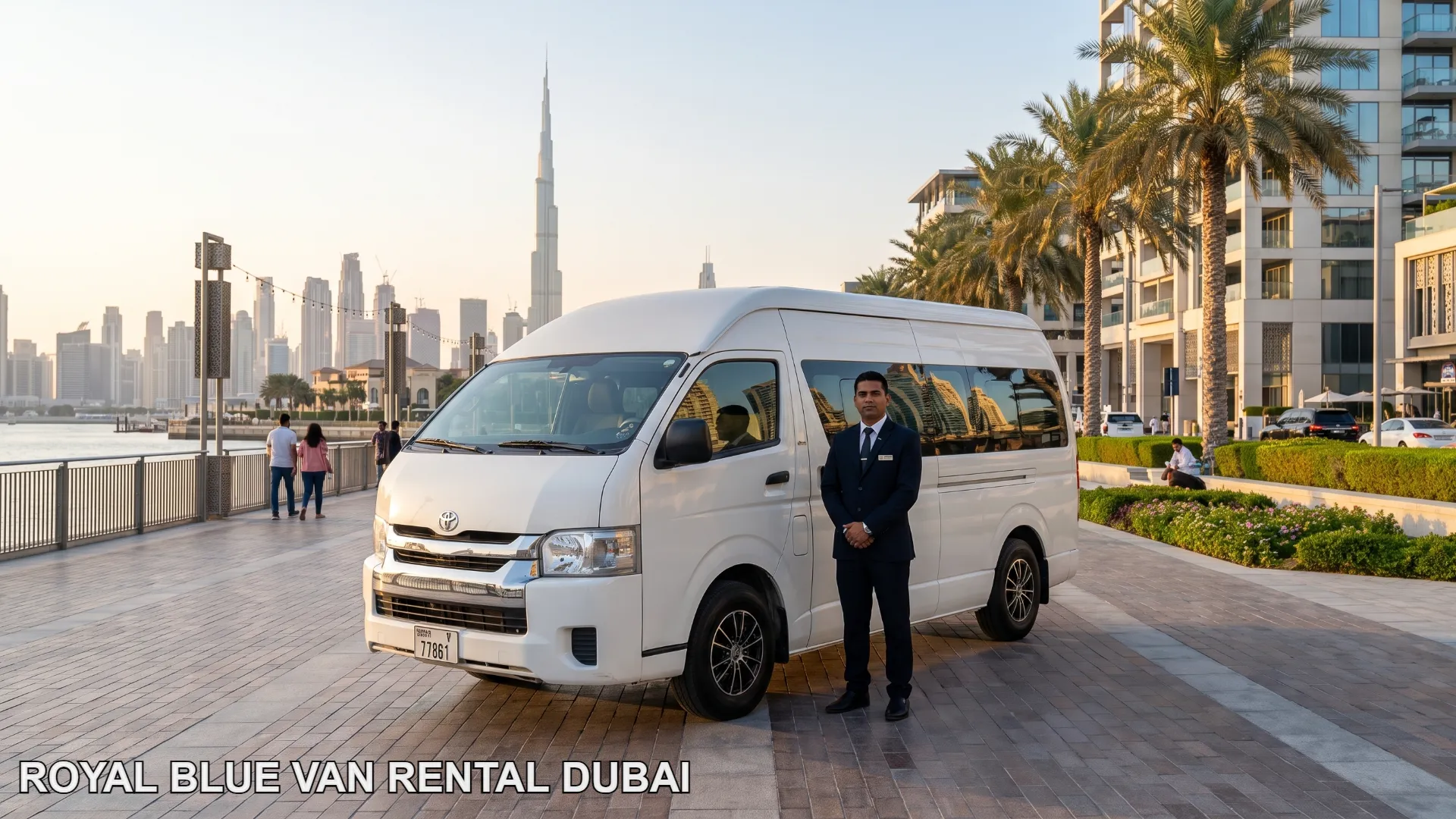
Match the vehicle to the hotel pickup arrangement
A passenger van may suit a smaller delegate wave, a speaker party or a hotel with limited demand. The decision still depends on actual seating, bags, entry arrangements and how frequently the vehicle must repeat the route.
Before finalizing a hotel shuttle, identify where passengers will wait and who will announce the departure. A well-chosen vehicle does not solve an unclear meeting point.
Conference Transportation
Conference transport planning is shaped by fixed commitments: registration, keynote sessions, workshops, networking breaks, private meetings and closing remarks. Most delegates need to arrive before the first major session, not at the exact published start time. Work backward from the time they must be inside the building, allowing for walking from the drop-off point, security screening where applicable and registration queues.
Create distinct plans for morning arrival, midday movements and evening departure. The morning often produces the largest concentrated demand; the return may be spread across a longer window. A networking reception after the main programme can produce another late departure peak. The correct timetable follows the actual agenda rather than a generic hourly shuttle pattern.
Speakers and organizers may need earlier arrivals than delegates. A speaker preparing for a sound check should not be assigned to a vehicle scheduled for the general audience. Where appropriate, treat speakers, VIPs and event staff as separate movement categories with their own instructions and backup contacts.
For conferences spanning multiple venues, write down which sessions require attendees to change buildings. A transfer between a conference centre and an evening reception is not just a return trip: it has a different destination, loading area and passenger group. Share the schedule with venue operations and the event team before publishing it to attendees.
Delegate arrival and registration
A useful method is to define the desired “at registration” time first, then subtract walking, unloading, driving and boarding allowances. If the opening keynote is at 09:00, the shuttle should not be planned to reach the venue at 09:00. The specific buffer must be chosen for the actual venue and event.
Stagger hotel departures when possible, especially if multiple properties feed the same entrance. Give delegates a clear latest boarding time and explain whether late arrivals must contact the coordinator rather than expecting a delayed shuttle.
VIP and speaker movements
Keep sensitive itineraries on a need-to-know basis and give the responsible coordinator the exact pickup instructions. Check whether the venue has a designated speaker entrance and whether special access credentials are required. Do not assume that a general delegate loading point is appropriate for every participant.
When one executive has several meetings, a dedicated vehicle plan may be more practical than relying on a fixed shuttle. The planning principle is schedule reliability and clarity, not automatically selecting the most expensive vehicle category.
Exhibition / Trade Show Transportation
Exhibition transport often has more varied passenger patterns than a conventional conference. Exhibitors may arrive early for booth preparation, trade visitors may enter throughout the day, and staff may stay after closing. A single departure schedule for everyone can create unnecessary waiting or miss the access window needed by exhibitors.
Distinguish exhibitor staff, trade visitors, buyers, speakers, sponsors and setup personnel. Some will travel from hotels; others may start from offices, airports or another venue. Equipment cases and display materials can also change the vehicle requirements. Confirm what can be transported as passenger luggage and whether any bulky items require a separate logistics arrangement.
Exhibition venues may use specific vehicle entrances, coach bays or temporary event-day traffic systems. Always check the current venue instructions, especially during build-up and breakdown periods. Do not assume that a transport arrangement used at a previous event will still be approved.
Closing time can produce a sharp departure peak. Exhibitors may leave later than visitors, while international attendees may need direct airport transfers. Create separate closing-day scenarios rather than sending everyone to the same pickup point at the same moment.
Build-up, show days and breakdown
Treat each phase as a separate schedule. Build-up can require earlier staff arrival and equipment considerations. Public show days may require repeated hotel-to-venue loops. Breakdown can create late departures and additional coordination at venue exits.
Ask the exhibition organizer for access instructions, credential requirements and the permitted timing of passenger pickup. These operational details should be confirmed before the itinerary is circulated.
Visitor peaks and flexible departures
A visitor shuttle may work as a repeating loop when demand is spread across the day, while a fixed departure can work better for a hotel group attending a scheduled programme. Track actual passenger demand and make the departure pattern understandable to visitors.
Avoid publishing “every ten minutes” or any other fixed frequency unless the vehicle cycle and available fleet can support it. A realistic schedule is more useful than an attractive but unreliable promise.
Minibus Planning for Delegate Groups
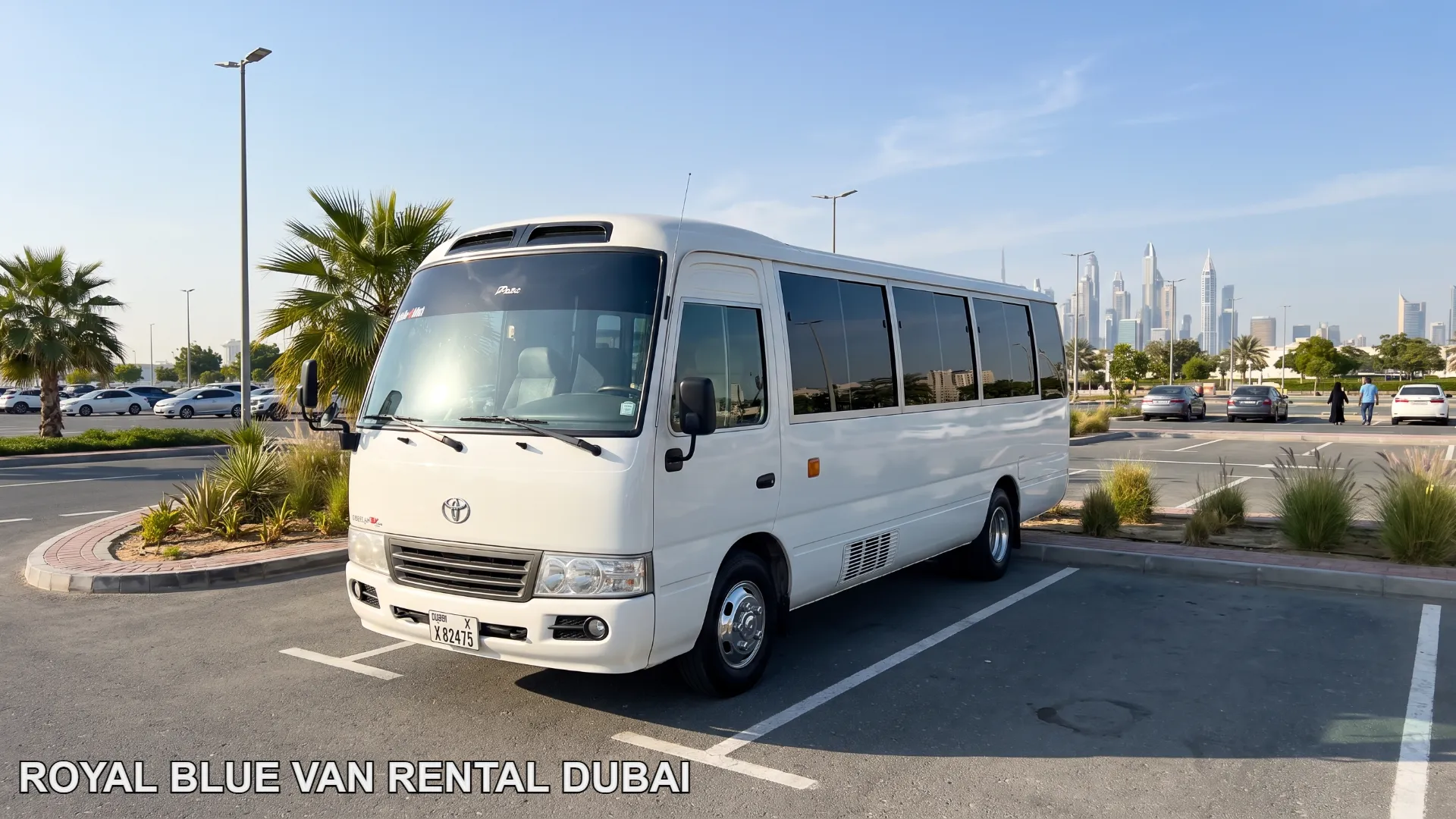
Coordinate medium-sized arrival waves
A minibus can be a useful category for hotel groups that are too large for a small van but do not require a full coach. Confirm the actual seat layout and available baggage space before allocating a passenger group.
One clear departure point, a passenger headcount and a defined venue drop-off often matter as much as the vehicle itself.
Shuttle Frequency & Fleet Size
To estimate shuttle fleet size, begin with the busiest passenger wave and the usable capacity of the proposed vehicle. Then estimate how long one complete operating cycle takes: boarding at the origin, travel to the destination, unloading, return travel and any necessary repositioning. The result is a planning model, not a guaranteed travel-time prediction.
For example, imagine 120 delegates who must all reach a venue in one departure wave and a hypothetical vehicle with 20 usable seats. That demand requires six vehicle departures. It does not necessarily require six separate vehicles if the event timetable permits repeat journeys. Whether repeats are possible depends on the full round-trip cycle and the arrival deadline.
A second illustrative calculation uses a 60-minute complete cycle and a 15-minute desired departure interval. Maintaining that interval would require four vehicles circulating in the loop, assuming consistent cycle times and no operational disruption. If the cycle increases, the interval or number of vehicles must be adjusted. These figures illustrate the arithmetic only; they are not Royal Blue fleet specifications or route estimates.
Usable seats are the seats that can actually be allocated to the group after accounting for the vehicle configuration, any agreed spacing and relevant baggage arrangements. For luggage-heavy airport transfers, a vehicle’s nominal passenger count may not represent the practical passenger-and-baggage fit. Review the passenger and luggage capacity guide for a deeper explanation.
Compare fixed departures, continuous loops and dedicated transfers. Fixed departures are easy to communicate and suit known hotel groups. Loops are useful where demand is recurring and the route is predictable. Dedicated transfers can serve speakers or small groups with special schedules. Some events need a combination.
A practical fleet-sizing sequence
First, count passengers in each departure window. Second, identify suitable vehicle categories and verify usable capacity. Third, estimate the complete cycle, including passenger loading and venue access. Fourth, calculate the number of departures needed. Fifth, test whether vehicles can repeat the route before the latest arrival time. Finally, add a contingency decision for delayed loading or a change in demand.
Do not build a schedule that depends on every movement happening at its fastest possible speed. The aim is a timetable that remains understandable when guests arrive late or traffic slows the journey.
One coach or several smaller vehicles?
A coach may consolidate a large group travelling from one origin to one destination at the same time. Several smaller vehicles may be easier when passengers start from different hotels, have different arrival deadlines or need separate VIP arrangements. The best choice depends on the route and timing as well as headcount.
When reviewing group transportation options in Dubai, describe the actual passenger movements so the comparison reflects your event rather than a generic seat-count chart.
Which Shuttle Operating Pattern Fits?
These are general operating models. Actual feasibility depends on the venue, vehicle, schedule and confirmed passenger demand.
| Pattern | Best planning situation | Main risk to manage |
|---|---|---|
| Fixed scheduled departures | Known hotel groups with a common venue arrival time | Passengers missing the stated boarding window |
| Continuous shuttle loop | Repeated demand between a limited number of stops | Cycle time increasing during traffic or loading |
| Dedicated point-to-point transfer | Speakers, VIPs or groups with unique timing | Changes to individual itineraries |
| Multiple hotel pickup route | Smaller groups distributed across nearby properties | Too many stops causing late arrival |
| Mixed fleet plan | Different passenger waves and vehicle requirements | Conflicting instructions between coordinators |
Illustrative Shuttle Capacity Calculations
All numbers are hypothetical examples for explaining calculations, not quotations, fleet capacities or predicted travel times.
| Scenario | Calculation | What it means |
|---|---|---|
| 120 delegates, 20 usable seats | 120 ÷ 20 = 6 departures | Six loaded vehicle trips are required for that wave |
| 60-minute cycle, 15-minute interval | 60 ÷ 15 = 4 vehicles | Four circulating vehicles in an idealized continuous loop |
| 80 delegates, 20 usable seats | 80 ÷ 20 = 4 departures | Repeat trips may work only if arrival deadlines permit |
| Two hotels, different session times | Calculate each hotel wave separately | One combined average may hide a peak |
Coach Planning for Larger Conference Waves

Keep large groups on a clear timetable
A coach may reduce the number of separate departures when many delegates travel together. It also requires attention to the venue’s approved loading area, boarding instructions and the time needed to assemble the group.
Confirm the venue approach and vehicle suitability before making the coach the default choice. A large vehicle is not automatically more efficient for every hotel route.
On-Site Coordination
Even a carefully calculated shuttle schedule can fail if passengers do not know where to stand or who can answer questions. On-site coordination connects the published plan with what is happening at hotel entrances, airport meeting points and venue loading zones. Establish one source of truth for departure times and use the same wording across signs, emails and coordinator messages.
Assign a transport lead who can approve changes, hotel contacts who can report passenger readiness and a venue contact who can confirm whether loading areas remain available. Give each group a clear boarding location and a contact path for missed pickups. Decide in advance who can hold a departure, who can move passengers to another vehicle and how those decisions are communicated.
Passenger messages should contain the date, exact pickup point, time to assemble, intended departure, destination and relevant contact details. For international delegates, plain language is especially valuable. Avoid internal shorthand or ambiguous instructions such as “outside the main hall” when several entrances exist.
On the day, track actual departures and arrivals rather than relying solely on the planned schedule. A simple log can reveal whether a hotel is regularly slow to assemble guests or whether a venue drop-off takes longer than expected. That information can guide the next departure wave and improve subsequent event days.
Arrival marshals and passenger communication
A designated marshal or coordinator can help passengers identify the correct vehicle and maintain an accurate headcount. The coordinator should not rely on memory alone: a current manifest and a simple boarding check are more dependable for busy events.
Publish the same pickup instructions through the event’s chosen communication channel and repeat essential details in a reminder. If the location changes, clearly label the new message as an update and remove obsolete instructions wherever possible.
Handling delays and changed plans
Decide how to respond when a flight arrives late, a speaker’s meeting runs over, or an exhibition session finishes early. Not every delay requires a new vehicle; sometimes a revised boarding wave is sufficient. The key is knowing who makes the decision and who tells passengers.
Create a small contingency table covering missed shuttles, changed hotel assignments, traffic delays, venue entrance changes and last-minute group size adjustments. Record the preferred response and the person responsible, while avoiding promises that a backup vehicle will always be available.
Multi-Day Events, Evening Functions & Closing-Day Departures
A three-day conference is not one schedule repeated three times. The first day may include airport arrivals and registration, the middle day may have concentrated hotel shuttles, and the last day may combine conference sessions with airport departures. Exhibition build-up and breakdown create additional movement patterns. Build a day-specific schedule and compare passenger demand for each phase.
Evening receptions deserve their own transport plan. Delegates may leave the main venue in one wave but return to hotels at different times. Consider whether fixed return departures, smaller dedicated transfers or several staged waves better match the programme. Publish the final pickup location before guests enter the reception.
Closing-day travel is often more sensitive than the first morning. Some passengers must reach an airport, others will stay for a final meeting, and some may have luggage with them. Keep airport-bound travellers separate in the manifest, verify their required departure time and avoid assuming that the ordinary hotel shuttle meets their needs.
For multi-day planning, hold a short daily review of passenger counts, missed pickups, venue access changes and actual cycle times. Update the next day’s plan and share the revised version with all coordinators. This is more effective than relying on a schedule that was finalized weeks before the event.
Sample day-of-event timeline
An illustrative morning could include hotel assembly, a first shuttle departure, delegate arrival before registration, a second departure for later attendees, and a dedicated movement for speakers. Midday might require no shuttle at all, while the end of the keynote could produce a large return wave. The precise times must follow the event agenda and real route assessment.
Use event milestones instead of copying a generic timetable: registration opens, first session starts, exhibition doors open, reception begins, venue closes. Then calculate backwards to establish sensible boarding windows.
How to close the transport operation
At the end of each day, reconcile the planned and actual passenger movements, confirm whether any attendees still need transport and communicate the final departure clearly. Close out unresolved changes before staff leave the venue.
A short post-event review should record what caused confusion and what worked well. These observations improve the next event’s hotel clustering, passenger messages and vehicle allocation.
Event Transport Budget & Quote Planning
Event transport costs depend on the requested vehicles, service duration, number of operating days, journey distances, waiting arrangements, pickup complexity and schedule. A simple point-to-point transfer and an all-day repeating shuttle loop are different operating requirements even when they use the same vehicle category. The budget should reflect the movements, not only the number of delegates.
When comparing transport proposals, confirm what itinerary each proposal assumes. One may include a single morning departure and evening return; another may include several daytime loops. Ask whether the planned waiting periods, additional stops and schedule changes are addressed. Do not compare two totals as if they represent the same work when their scopes differ.
Avoid making the lowest initial estimate the only selection criterion. A plan that requires passengers to miss sessions, travel from an inconvenient meeting point or wait for an uncertain return journey can create other event costs. The more useful comparison is total operational suitability for the agenda.
For a detailed vehicle-specific cost discussion, keep the focus on your confirmed itinerary and review the broader Dubai van rental cost guide. This article intentionally does not publish unverified event transport rates.
Questions to ask when comparing plans
Does the proposal cover the correct event dates and times? Are all hotel pickups included in the described itinerary? Is the passenger demand realistic for the selected vehicle arrangement? Does the operating pattern allow for venue loading time? What happens if the programme changes? Are airport and evening transfers part of the same plan or separate movements?
Record the answers in a comparison sheet so the event team can approve the scope before communicating travel arrangements to guests.
Common Event Transportation Planning Mistakes
One common mistake is booking around total event attendance instead of transported demand by time and route. Another is choosing a vehicle category before confirming bags, passenger needs and the venue’s permitted loading arrangements. Both errors can produce an apparently simple plan that fails when people begin to arrive.
A third mistake is treating the advertised departure time as the passenger meeting time. Groups need time to gather, check names and board. If the published message tells everyone to appear at the moment the vehicle should leave, departures will predictably slip. Publish an assembly window and a distinct departure time.
Organizers also underestimate the operational effect of several hotel stops. A route that looks short on a map may become difficult when each stop involves passenger counting, luggage loading and access constraints. Test the actual stop order and consider splitting a route if the arrival deadline is strict.
Finally, do not let different teams circulate competing instructions. Event registration, hotel concierge teams, transport coordinators and venue operations should all reference one approved schedule. When a change is necessary, identify the version, explain the affected journeys and communicate it through the agreed channels.
The simple prevention test
Before publication, ask whether a first-time delegate could find the pickup point without calling anyone, whether the vehicle can reasonably complete its assigned route before the arrival deadline, and whether a coordinator knows what to do if passengers miss a departure.
If any answer is uncertain, the plan needs another operational check. Clear instructions and realistic movement assumptions are more valuable than a polished schedule that cannot be followed.
Event Transport Checklist
Event dates and programme
Record registration, session, exhibition and evening-function milestones.
Actual transported demand
Count passengers by route, time window and attendee category.
Hotel and airport origins
Confirm each address, terminal, flight detail and pickup entrance.
Venue access
Verify current coach, minibus or van loading instructions with venue operations.
Passenger and luggage profile
List bags, equipment and relevant boarding or mobility needs.
Shuttle pattern
Choose fixed departures, repeating loops or dedicated transfers as appropriate.
Cycle-time assumptions
Allow for boarding, travel, unloading and return or repositioning.
Vehicle allocation
Check usable seats and whether repeat journeys fit the timetable.
Coordinator roles
Name the event lead and contacts at each pickup or drop-off point.
Passenger communications
Publish assembly time, departure time, exact location and update method.
Contingency response
Agree who handles delays, missed departures and venue changes.
Final reconciliation
Confirm closing-day movements and review the actual operation.
Map Passenger Movements
Separate origins, destinations, attendee groups and arrival deadlines.
Test Vehicle and Timing Fit
Check usable capacity, luggage, venue access and complete shuttle cycles.
Assign Coordinators
Choose who confirms headcounts, communicates changes and manages loading points.
Publish and Review
Share one approved passenger schedule and update it as event-day facts change.
Event, Conference & Exhibition Transport FAQs
Practical answers to the questions organizers ask while building a Dubai event transport schedule.
How do I plan event transportation in Dubai?
Start with the event agenda, actual transported passenger counts, hotels, airports and venue entrances. Divide demand into departure waves, verify vehicle and luggage fit, test journey cycles, assign coordinators and publish precise pickup instructions.
How many vehicles are needed for a conference?
The answer depends on passengers per departure wave, usable vehicle seats, full route cycle time and the latest acceptable arrival. Calculate required departures first, then determine whether vehicles can repeat journeys within the timetable.
How do hotel and venue shuttles work?
A shuttle moves delegates between agreed hotel pickup points and an event venue on fixed departures or a repeating route. Each hotel needs a clear meeting point, assembly time and passenger contact, and the venue must confirm an appropriate loading location.
What is the difference between conference and exhibition transport planning?
Conferences often follow registration and session start times, while exhibitions may have separate exhibitor, visitor, build-up and closing-day waves. Plan each group according to its actual access and departure requirements.
How do I calculate shuttle frequency?
Estimate a complete operating cycle, including loading, driving, unloading and returning. Divide the cycle duration by the desired departure interval to estimate how many circulating vehicles would be needed, then test that estimate against real constraints.
Should an event use minibuses or coaches?
Minibuses can suit medium-sized groups or several hotel origins. Coaches may suit larger groups travelling together. Confirm the actual passenger and luggage requirements, route access and schedule before choosing.
How do I plan transportation for 100 or more delegates?
Split delegates by origin and required arrival time. Calculate departures for each wave using confirmed usable vehicle capacity, then assess whether repeated journeys or several vehicles are needed. Avoid treating 100 people as one undifferentiated movement.
How do I coordinate delegates staying at different hotels?
Create a hotel-by-hotel passenger matrix, confirm each pickup point and compare direct departures with clustered routes. Give each hotel a named coordinator and avoid adding stops that threaten the venue arrival deadline.
What information should I collect from attendees?
Collect the travel details needed for the event: hotel or origin, expected transport dates, relevant flight details, passenger group, luggage and any boarding needs. Handle personal information only through the organizer’s appropriate processes.
How do I organize airport arrivals for international delegates?
Group passengers by airport, terminal, flight arrival and hotel destination. Allow for baggage collection and meeting-point coordination, and use a separate departures plan for the final day.
How should VIP and speaker transfers be planned?
Work from each speaker’s rehearsal, meeting or stage deadline. Confirm the appropriate venue entrance and provide a responsible contact. Use a separate itinerary where a shared delegate shuttle cannot meet the timing.
What should I confirm with an exhibition venue?
Verify passenger pickup and drop-off zones, permitted vehicle types, access times, event-day traffic instructions and any credentials needed for staff or exhibitors.
How do I plan transport around conference registration times?
Set a target time for delegates to be inside registration, then work backward for walking, unloading, driving and boarding. Publish assembly and departure times separately.
What is a shuttle turnaround time?
It is the full time needed to load passengers, travel to the destination, unload, return or reposition and be ready for the next departure. It is longer than the one-way driving time.
When should I use a continuous shuttle loop?
A repeating loop can work when demand continues across a defined period and the route is predictable. Check whether the desired interval can be maintained with the available vehicles and real cycle time.
How do I manage transport for a multi-day event?
Prepare a separate movement plan for each day, including setup, main sessions, evening events and closing-day departures. Review actual performance and update the next day’s schedule.
What happens if a flight is delayed?
The coordinator should verify the updated arrival information, identify affected passengers and review the agreed pickup plan. Any revised meeting instructions should be communicated clearly; do not assume an automatic replacement transfer.
How should I plan for traffic delays?
Use realistic travel assumptions, allow sensible schedule buffers and identify which arrival deadlines are fixed. Give the transport lead authority to communicate changes and review the plan when road conditions affect the schedule.
How do I communicate pickup instructions to delegates?
Share the date, exact meeting location, assembly time, departure time, destination and coordinator contact through the event’s chosen channel. Use the same wording in all messages and label updates clearly.
What affects an event transportation budget?
Vehicle requirements, service duration, route distance, number of stops, operating days, waiting arrangements and schedule complexity can all affect the scope. Compare proposals against the same confirmed itinerary.
How should I plan closing-day departures?
Separate airport-bound passengers from hotel return groups, verify flight requirements and luggage needs, and plan around the final programme. Publish the last departure point and time well before the event ends.
How do I coordinate multiple pickup points?
List each origin and its passenger demand, confirm vehicle access, and test the stop sequence against the arrival deadline. Use separate routes if a combined journey becomes unreliable.
What should an event transportation checklist include?
Include the agenda, transported passenger counts, hotels, airport details, venue access, luggage, vehicle categories, departure waves, coordinator contacts, communication plan and response to changes.
What are the most common event transport planning mistakes?
Common mistakes include using total attendance instead of actual shuttle demand, ignoring luggage, failing to verify loading zones, underestimating full shuttle cycles and sending conflicting pickup instructions.
Can we combine hotel shuttles and airport transfers in one event plan?
Yes, they can be coordinated within one overall movement plan, but they should be listed as distinct journeys with their own flight information, luggage requirements and timing assumptions.
How can I decide between one large vehicle and several smaller vehicles?
Compare passenger origins, departure deadlines, venue access and the number of repeat journeys possible. One large vehicle may simplify a common departure, while smaller vehicles may suit split hotels or different schedules.
Related Transport Guides
For general vehicle selection, read our Dubai group transportation guide. For longer delegate journeys, see our UAE intercity group transport guide. If you are still deciding on the right vehicle category, explore our fleet overview and minibus options in Dubai.
Our Royal Blue van rental Dubai homepage introduces the wider chauffeur-driven transport context; this article remains focused on planning event movements and delegate logistics.
Discuss Your Event Transport Requirements
When your delegate counts, hotels, venue details and event schedule are ready, share the journey outline with our team so the suitable vehicle and movement arrangements can be discussed.